The hardest part of buying a steel building usually isn't the building — it's deciding how big it should be. Go too small and you're shuffling equipment around within a year. Go too big and you're heating, lighting, and walking across space you never use.
The trick is to start with the job, not the dimensions. A 30x40 metal building that's perfect as a two-car garage with a workshop is cramped the moment you try to run a small business out of it. A 40x60 metal building that feels cavernous for hobby storage is just right for a working shop with service bays.
This guide walks through the most popular metal building sizes, what each one realistically holds, and how to match a footprint to how you'll actually use it — whether that's a garage, a workshop, a barn, a shop, or a place to live and work under one roof.
Every size below maps to a square footage and a set of jobs it handles well. Use this as a shortlist, then jump to the section that fits your plan.
A quick rule of thumb: a comfortable single parking bay needs roughly 12 feet of width, and most vehicles want about 20 feet of depth. Keep that in mind as you read the layouts below — it's the difference between parking a truck and parking a truck and opening its doors.
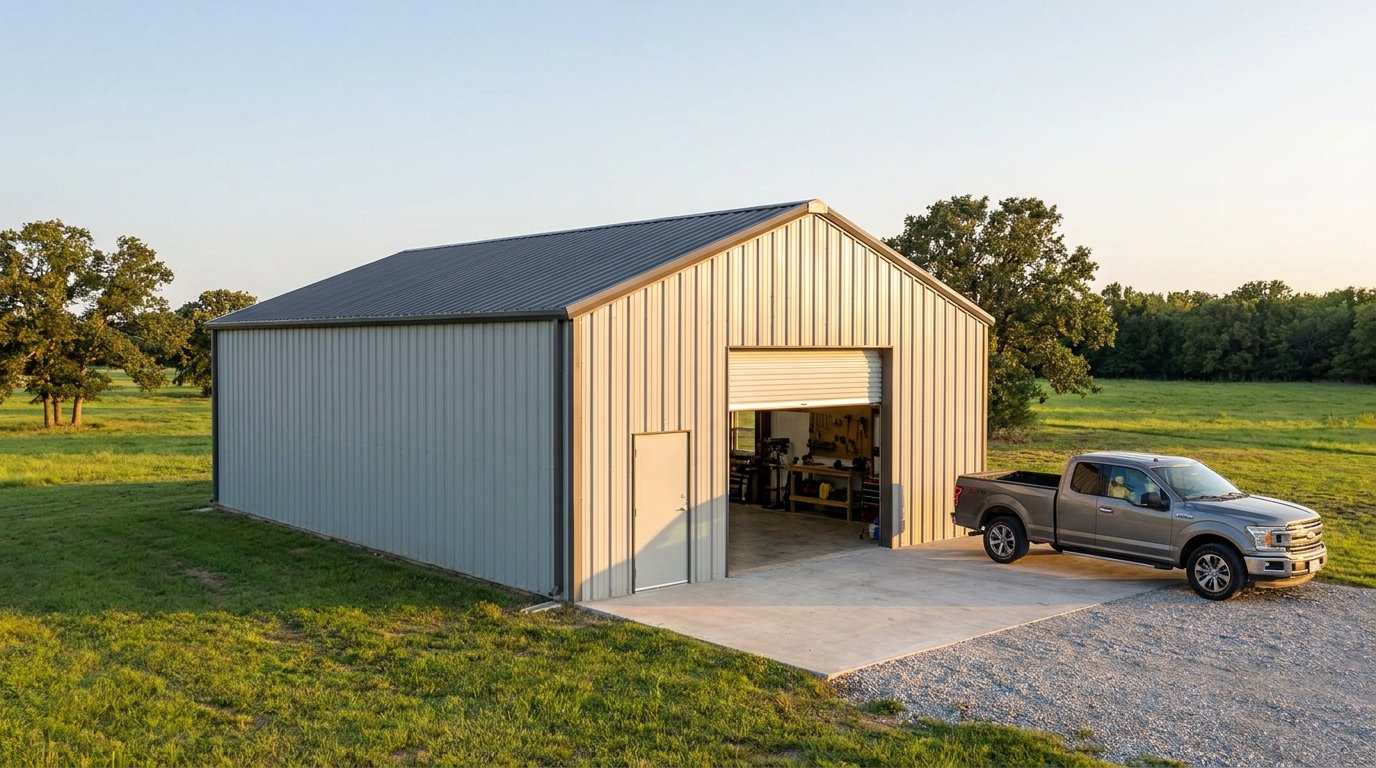
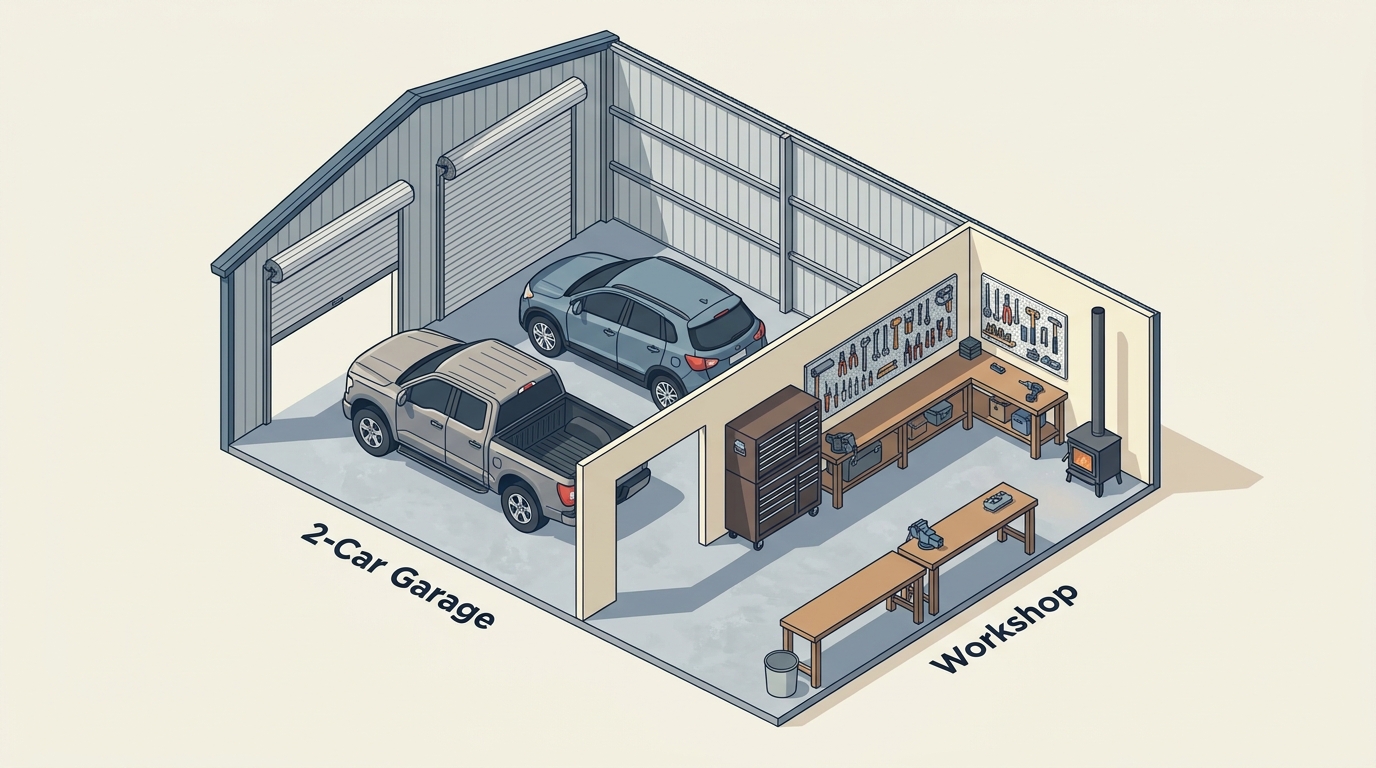
The 30x40 is the workhorse of the residential and hobby world, and for good reason: 1,200 square feet is enough to do two things at once. The classic layout splits the building down the middle — a two-car garage on one side, a dedicated workshop on the other — so vehicles and projects never compete for the same floor.
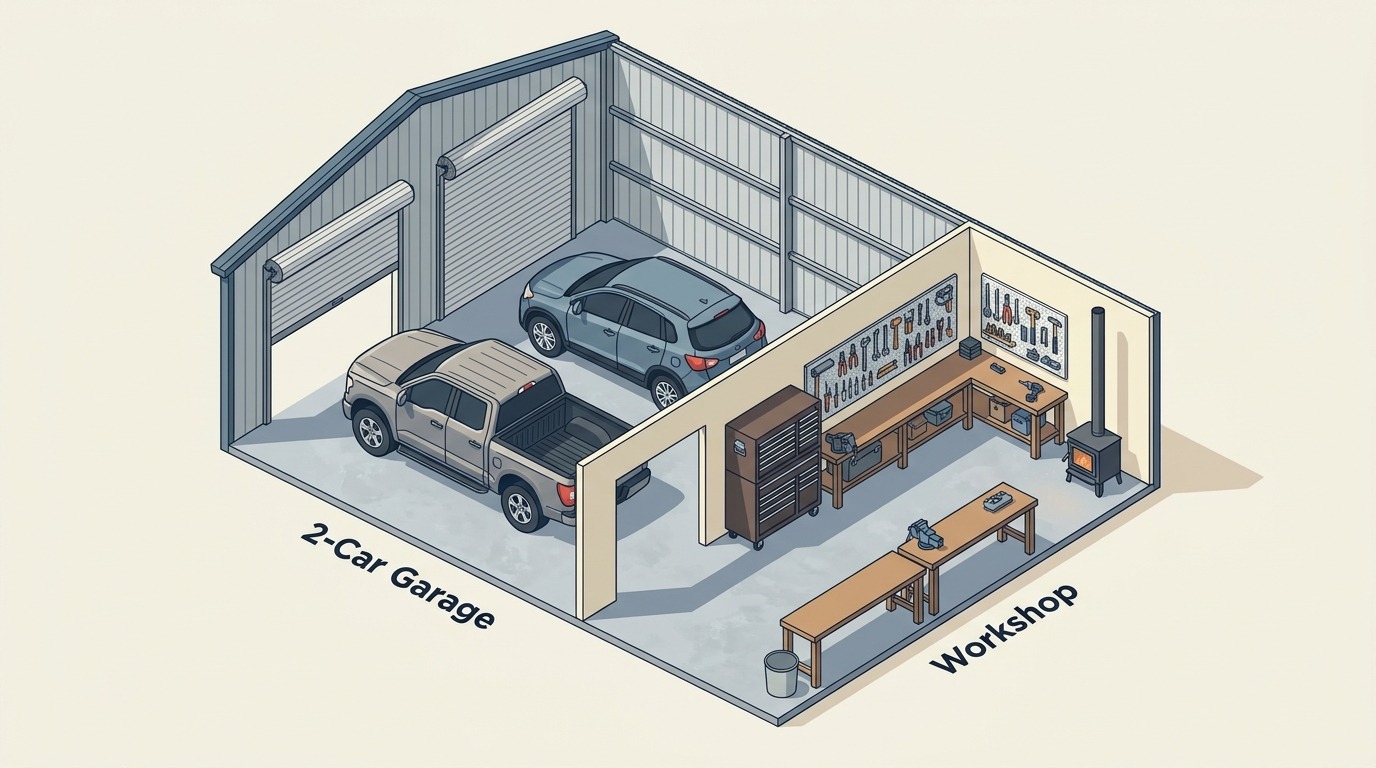
What fits comfortably in a 30x40 metal building:
The 30x40 garage is popular enough that many buyers start here and only size up once they've sketched out their equipment. If you're on the fence between this and the next size, ask whether you'll ever want a vehicle lift or a second project running at the same time — that's usually what pushes people to a 40-foot width.
If the 30x40 is the hobbyist's building, the 40x60 is the one people choose when the building has a job to do. At 2,400 square feet with a 40-foot clear width, it comfortably holds multiple service bays, a mezzanine office, and storage without anything feeling crowded.
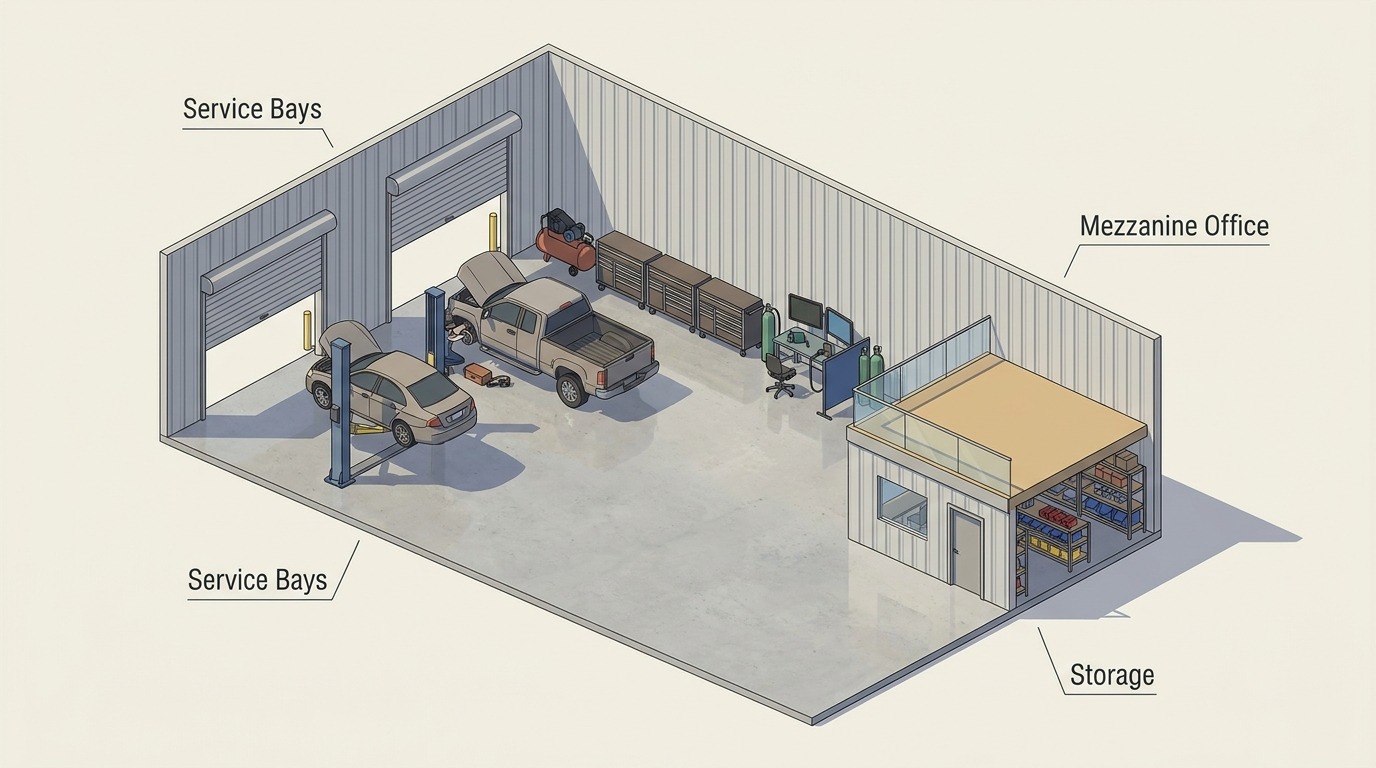
The 40x60 shop is one of the most-searched metal building sizes for a reason — it sits right at the sweet spot between a generous home shop and genuine light-commercial space. Common configurations include:
The extra width matters more than the numbers suggest. A 40-foot span lets you park and work around equipment instead of just parking it, and it leaves room for a mezzanine that effectively adds floor space overhead.
Between the two headliners sits a band of sizes that solve specific problems:
Once you cross into the larger sizes, you're typically planning for commercial, agricultural, or industrial use:
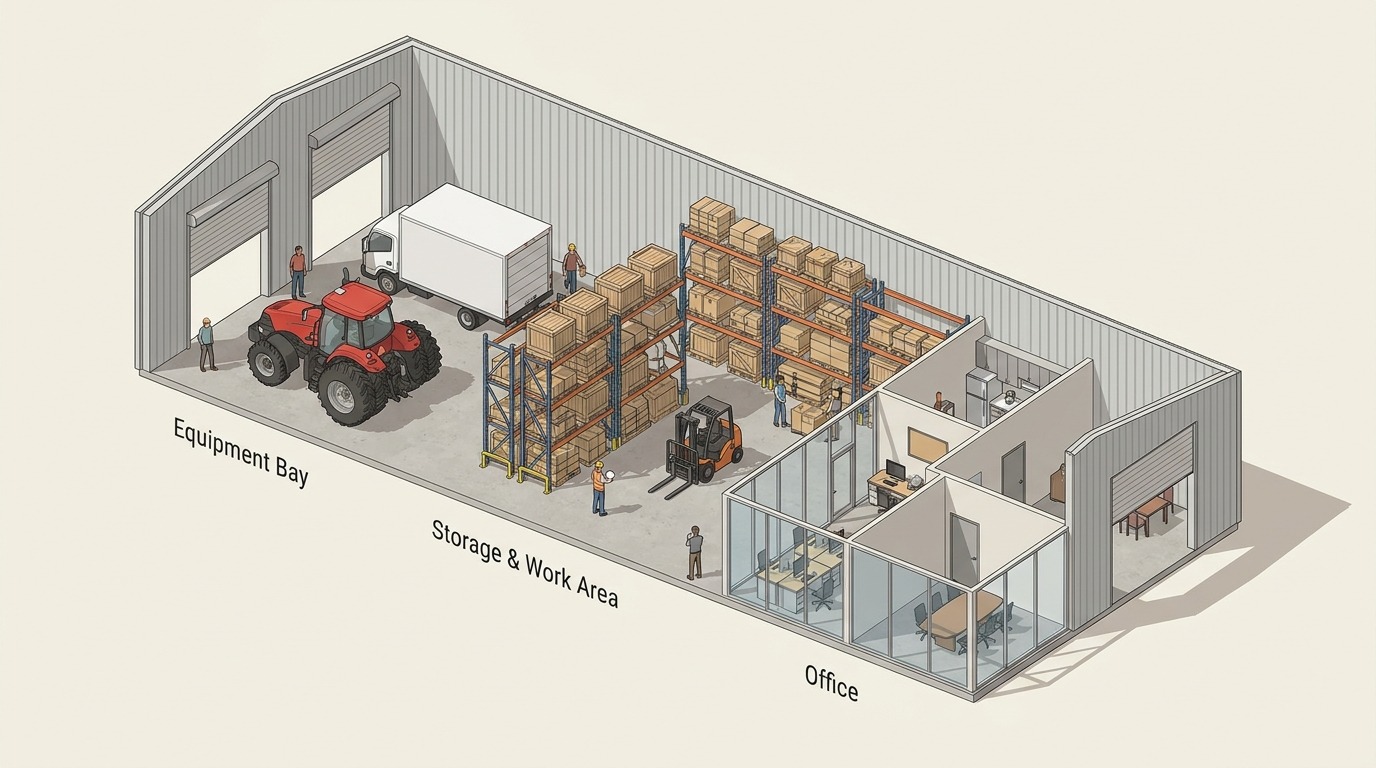
At these sizes, clear-span construction — no interior support columns — becomes one of the most valuable features. It's what lets you reconfigure the floor as your needs change instead of designing around posts in the middle of the room.
Not every project needs to go big. A 24x30 metal building is a tidy single- or double-bay garage, a compact workshop, or covered storage for a lawn tractor, ATVs, or a small RV. It's the size to consider when you want everything out of the weather and locked up, without committing to a footprint you'll spend years growing into.
Searching by use is often easier than searching by dimensions. Here's how the popular sizes line up against the most common jobs.
Garage. For a two-car garage with a little breathing room, a 30x40 is the standard pick; a 24x30 works if you're parking only and don't need a workshop. Want space for a lift, a third vehicle, or a project car that lives on stands? Move up to a 40x50 or 40x60 metal building.
Workshop. A 40x40 gives you a wide, open, column-free floor that's easy to lay out. A 30x60 suits a long bench-and-bays workflow. For a serious shop that doubles as a business, the 40x60 shop is the most popular size on this list.
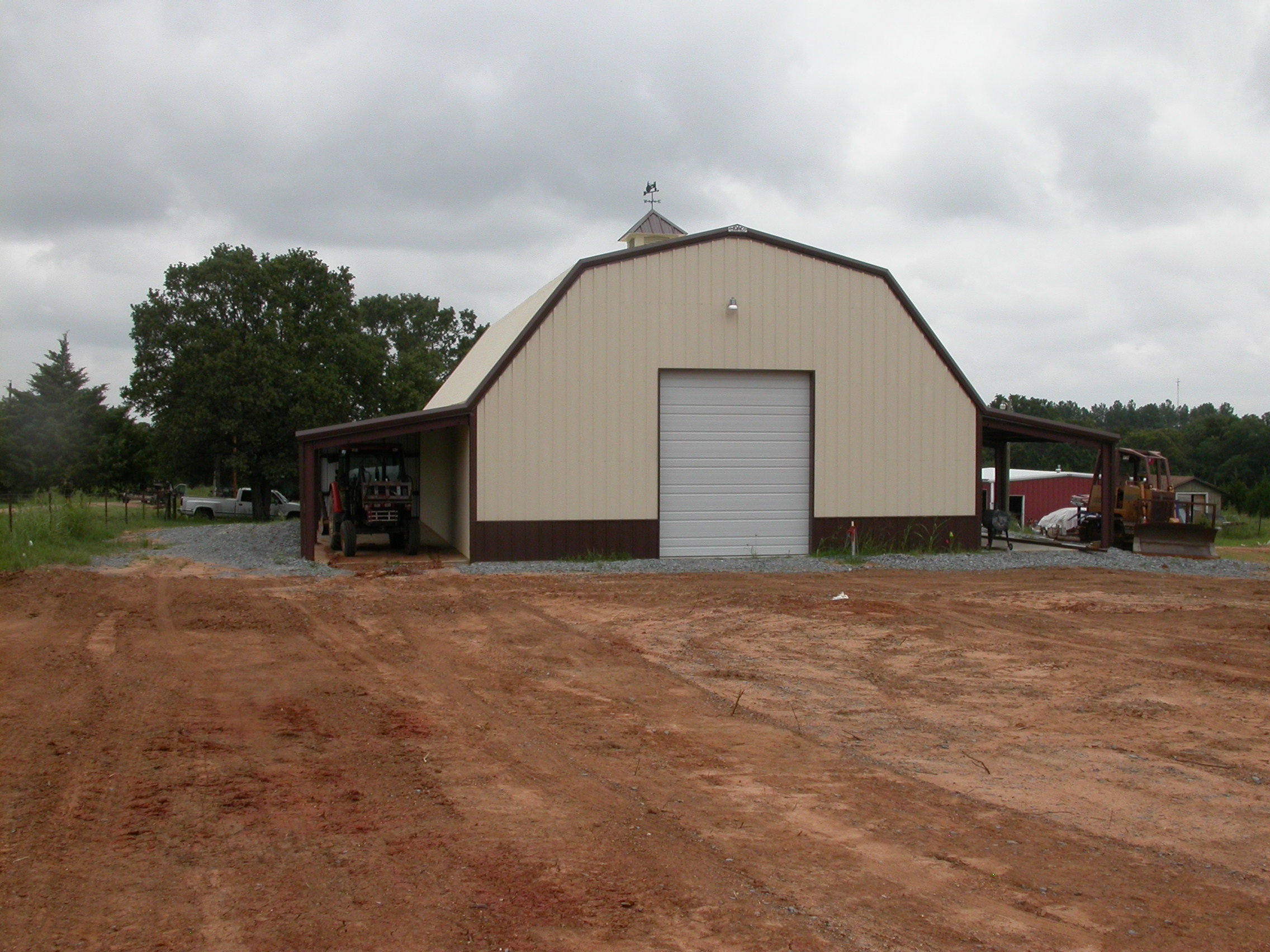
Barn. Metal barns scale cleanly: a 30x40 handles a few stalls plus feed and tack, while 40x60 and up give you room for equipment, a wash bay, and hay storage under one roof. If your build centers on livestock, hay, and equipment, our guide to agricultural metal buildings digs deeper into layout and durability.
Shop / small business. Light-commercial operations gravitate to the 40x60 and 40x80 for the working width and the option to wall off an office. Larger trades and fabrication shops move into 50x80 and 50x100 territory. If you're weighing a steel shop against a traditional pole barn, we compare the two here.
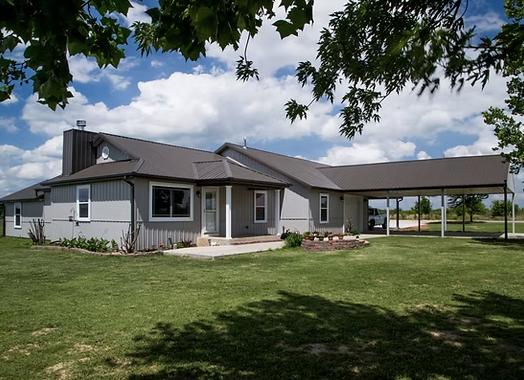
Living quarters (barndominium). A metal building with living quarters typically starts at 40x60, which leaves enough room to finish comfortable living space at one end while keeping a full garage or shop at the other. It's the most flexible "live and work in one place" footprint. If that's the direction you're leaning, our shouse floor plan guide walks through layouts from 30x40 to 60x80 with living quarters.
Two buildings with the same floor area can be very different in practice. Before you lock in a size, weigh these:
Clear height. Eave height determines what actually fits. A standard car needs very little, but RVs, lifted trucks, car lifts, and overhead doors for tall equipment can call for significantly more headroom. Decide on the tallest thing going inside before you settle on width and length.
Door placement and size. Where the doors go shapes how the building works. Drive-through layouts need doors on opposing walls; a shop with multiple bays needs them spaced along one side. Plan door openings around your workflow, not the other way around. For help picking door types and standard sizes, see our metal building garage door guide.
Room to expand. Many buyers regret sizing for today instead of three years out. If expansion is even a possibility, a building width that supports a future lean-to addition is worth considering now.
Insulation and climate control. Larger buildings are more expensive and slower to heat and cool, and condensation control matters in any steel structure. Insulation isn't an afterthought — factor it in early, especially for shops and living space.
Foundation and site. Square footage on paper still has to sit on a level, properly prepared slab. Confirm your site can accommodate the footprint plus working clearance around the building.
Permitting and classification. Local zoning and building codes may treat a residential garage, an agricultural barn, and a commercial shop very differently — and that classification can affect what you're allowed to build and where. Check with your local authority before you commit to a size and use.
What's the most popular metal building size? The 30x40 and 40x60 are consistently the two most popular sizes. The 30x40 dominates residential and hobby use as a garage-plus-workshop, while the 40x60 is the go-to for working shops, light commercial use, and barndominiums.
How many cars fit in a 30x40 metal building? Comfortably two cars plus a workshop, or three to four cars if you use the whole floor for parking. Allow roughly 12 feet of width and 20 feet of depth per vehicle for room to open doors and move around.
Can you insulate a metal building? Yes — and you generally should. Insulation controls condensation, keeps the building usable year-round, and makes heating and cooling far more efficient. It's easiest to plan insulation into the build from the start rather than retrofit it later, especially for shops and finished living space. Our complete guide to insulating a metal building breaks down the options and where each one works best.
Can you add a lean-to to a metal building later? In most cases, yes. A lean-to is one of the most common additions for extra covered storage or workspace, which is why it's worth choosing a size and layout now that leaves room to expand.
What color options are available for a metal building? Plenty. Rather than painting a building after the fact, you choose a durable factory finish up front — Indaco panels come in a wide range of metal building color options, so you can match your home, your property, or the look you're after from the start. A baked-on factory finish also holds up far better over time than an aftermarket repaint.
Are metal building kits something I can put up myself? Many metal building kits are designed for DIY-friendly assembly, arriving pre-cut and pre-drilled to bolt together. How realistic a self-build is depends on the size, your equipment, and local code requirements — larger spans and commercial classifications often call for professional help.
The best metal building size is the one that fits the job you're doing today with a little room for tomorrow. If you've narrowed it down to a footprint — or you're still deciding between a 30x40 garage and a 40x60 shop — Indaco's standard kit widths are built to match these popular sizes and the real-world uses behind them.
Explore Indaco’s metal building offerings or contact us to learn more.
Complete this short form, or give us a call anytime:

.JPG)