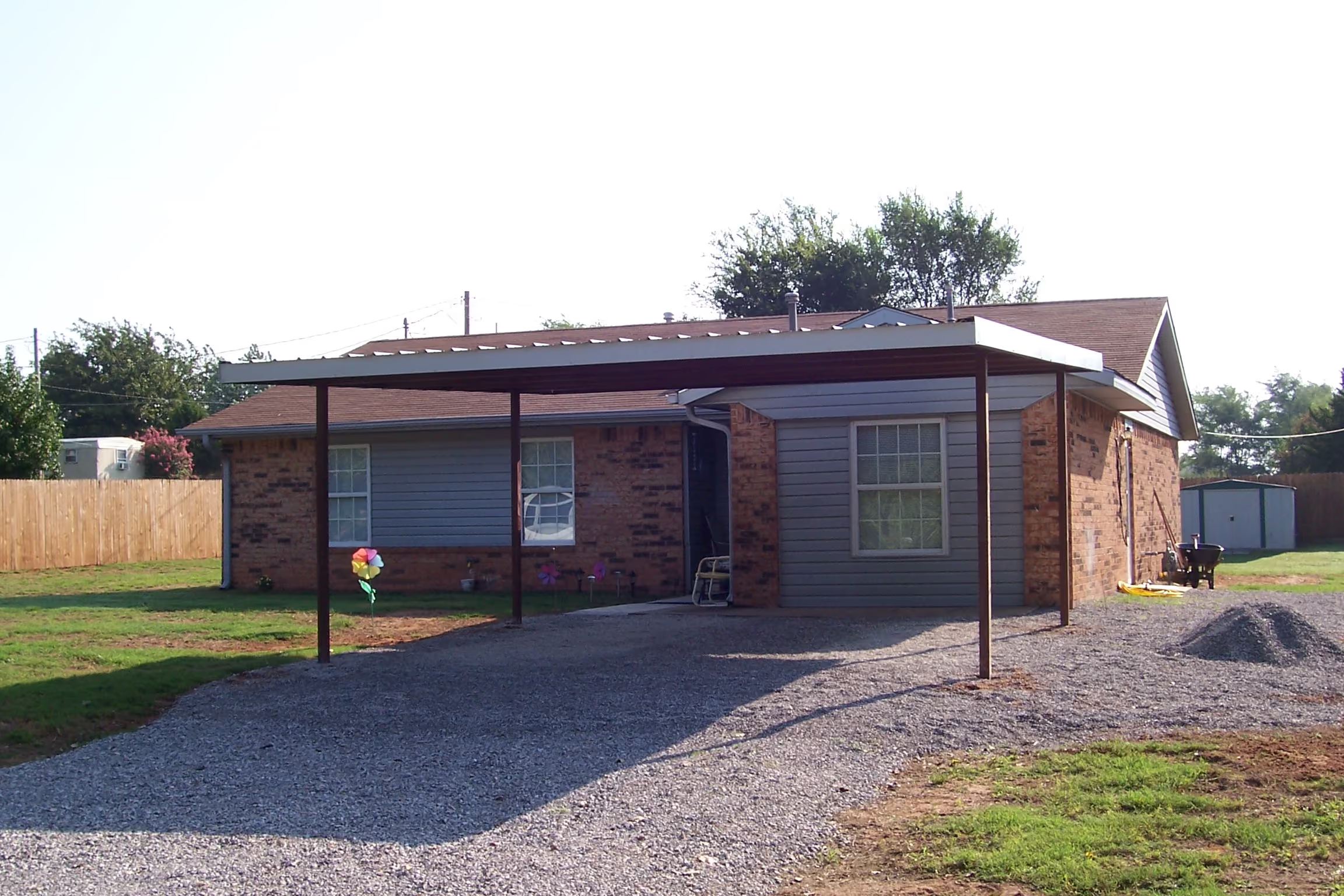
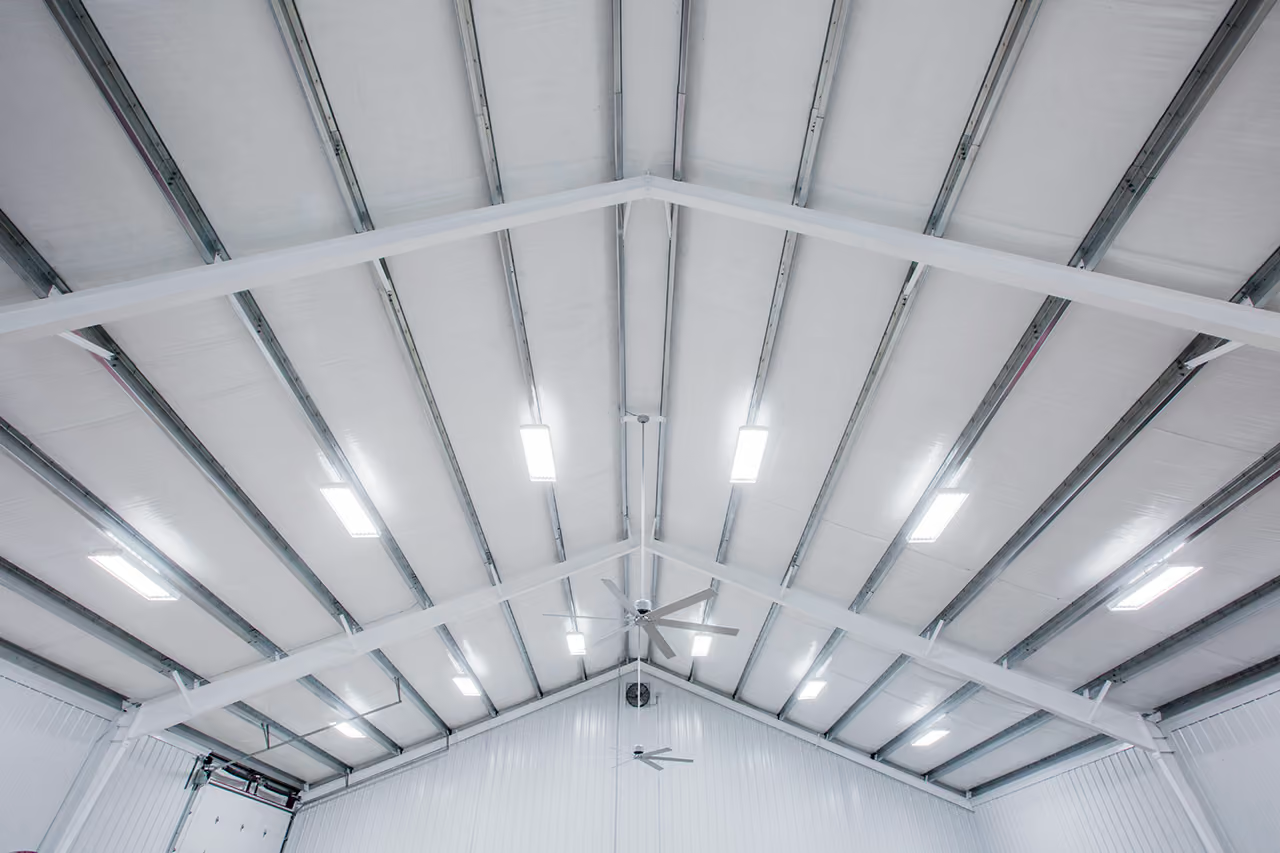
If you've ever looked up at the underside of a metal roof and seen those horizontal steel members running across the rafters, you've been looking at purlins. They're one of the most important components in a metal building — and one of the most commonly misunderstood.
This guide covers what purlins are, the different types you'll encounter, how they're sized and spaced, how they differ from related components like girts, and what to look for when specifying them for your next project. At Indaco Metals, we've been rolling C and Z purlins, plus eave struts, in-house at our Shawnee, Oklahoma facility for more than 30 years, so this is a component we know well.
A purlin is a horizontal structural member that runs perpendicular to the main rafters or trusses of a building and supports the roof sheathing or panels above it. In a typical metal building, the load path works like this: snow, wind, and dead loads press down on the roof panels, the panels transfer that load to the purlins, the purlins carry it to the rafters, and the rafters carry it down through the columns to the foundation.
Purlins are part of what engineers call the secondary framing system. The primary frame — the rafters and columns — handles the big structural job of resisting wind and gravity loads at the building scale. The secondary frame — purlins, girts, and eave struts — bridges between primary members and gives the panels something to attach to. Without purlins, there'd be nothing to fasten a roof to.
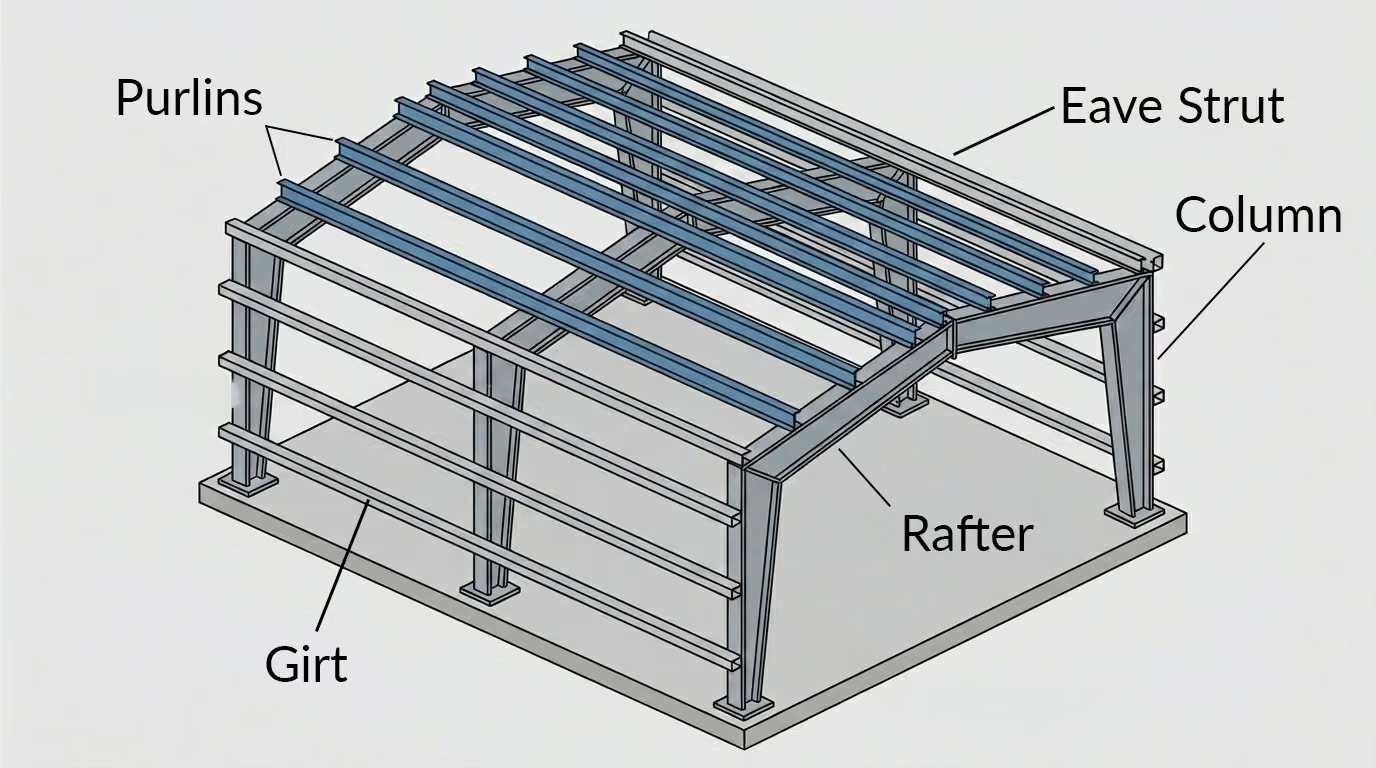
Where Purlins Fit in a Metal Building
To understand purlins, it helps to picture the whole framing system:
In a well-designed building, these secondary members work together. Purlins not only carry roof loads but also brace the top flanges of the rafters against buckling. Girts do the same for the columns. It's a system, not a collection of parts.
Types of Purlins by Shape
Purlins are cold-formed from steel coil into different cross-sectional shapes, each suited to particular applications. The three most common shapes in metal building construction are C-purlins, Z-purlins, and hat channels.
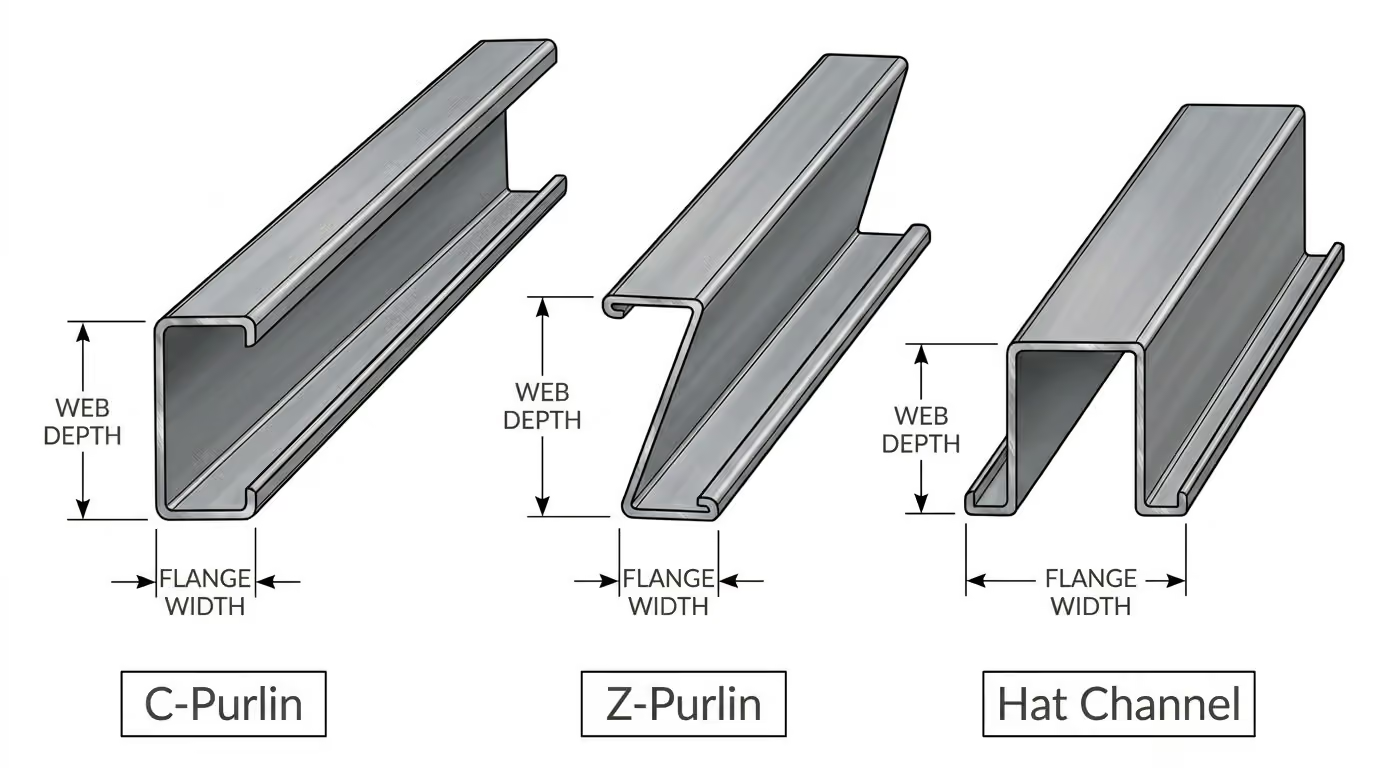
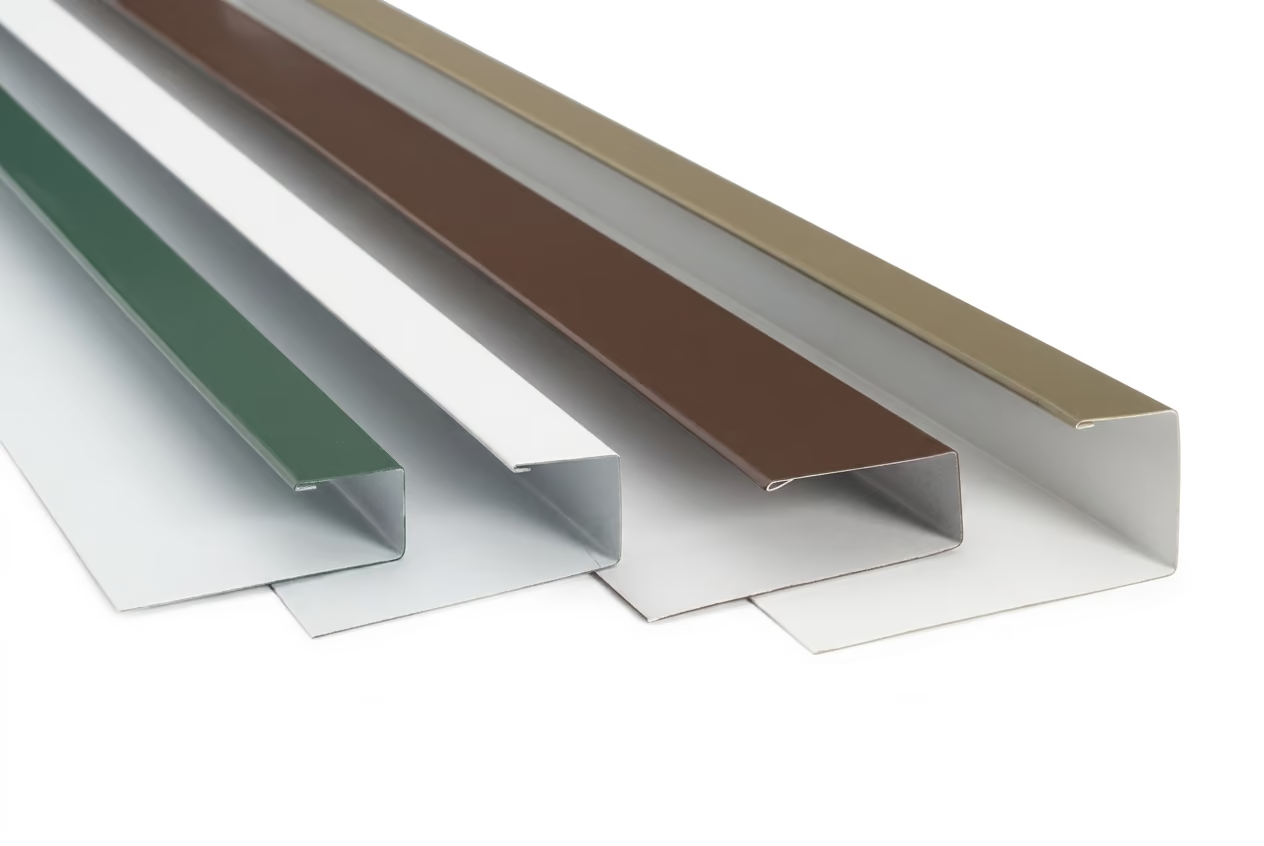
C-purlins are shaped like the letter C, with a vertical web and two parallel flanges. They're the most versatile option and the most commonly stocked profile. Because both flanges face the same direction, they're easy to bolt or weld to clip angles on the rafter, and they work equally well as roof purlins or wall girts.
C-purlins are typically the right choice for single-span applications, residential and light commercial buildings, and any project where simplicity of connection is a priority.
Z-purlins have the same web and flange dimensions as C-purlins, but the flanges point in opposite directions, making the cross-section look like the letter Z. That offset geometry lets two Z-purlins nest and overlap at the rafter supports, creating a continuous-span condition rather than a series of single spans.
Continuous spans distribute loads more efficiently, which means a Z-purlin can often span farther than an equivalent C-purlin, or carry more load over the same span. They're the preferred choice for longer-span roofs and larger commercial buildings. Indaco rolls both C and Z purlins and eave struts in-house, which means a single supplier can handle either profile and our engineering team can advise which is right for your span and load conditions.
Hat channels have a top-hat-shaped profile and are used most often as sub-framing for ceilings, light walls, or as bridging between deeper purlins. They aren't usually the primary roof framing member but show up frequently in finish-out work.
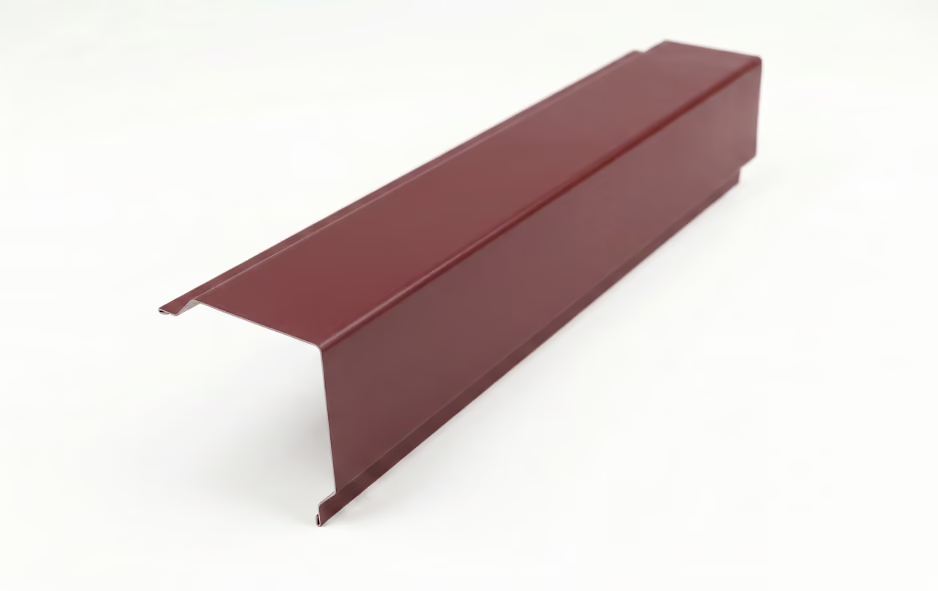
Eave struts are a specialty profile sized and shaped specifically for the eave condition — they tie together the wall framing and the roof framing at the building's edge and set the eave geometry for gutter attachment.
Almost all metal building purlins are made from cold-formed structural steel, typically ASTM A653 Grade 55 or similar. Cold-forming bends steel coil into the desired shape at room temperature, which actually increases the steel's yield strength compared to the parent coil.
Purlins are specified by gauge, which describes the thickness of the steel. Here's where one of the most common questions comes up:
Is 14 gauge thicker than 16 gauge? Yes. In sheet steel, gauge numbers work in reverse — the lower the number, the thicker the material. A 14-gauge purlin (around 0.075") is noticeably thicker and stronger than a 16-gauge purlin (around 0.060"). A 12-gauge purlin (around 0.105") is thicker still.
Standard purlin gauges in the metal building industry are 12, 14, and 16. Heavier gauges carry more load and resist deflection better, but they also cost more. Choosing the right gauge means matching the steel thickness to the actual loads and span — not over-specifying out of caution, and not under-specifying to save money.
How to Size Purlins
Purlin sizing is the question that trips up most do-it-yourself builders, and for good reason — it depends on more variables than a single rule of thumb can capture. That said, here are the depth-to-span ranges experienced builders use as a starting point:
These ranges assume reasonable spacing (typically 4–5 feet on center), moderate loads, and proper bracing. The actual maximum span for any purlin depends on:
Sizing purlins by rule of thumb gets you in the ballpark, but real spans depend on the building's loads, bay spacing, and local code. Indaco's in-house engineering team runs the calculations and provides stamped drawings with every building kit, so the purlin sizes you order are sized for your site and signed off for permitting — not guessed at from a forum post.
Standard purlin spacing in the U.S. metal building industry ranges from 4 to 6 feet on center, with 5 feet being the most common. As with sizing, the right spacing depends on several factors:
Tighter spacing lets you use smaller, lighter purlins but increases the total number of purlins (and the labor to install them). Wider spacing reduces piece count but requires deeper, heavier purlins. The optimal point usually falls in the 4-to-5-foot range for most metal buildings.
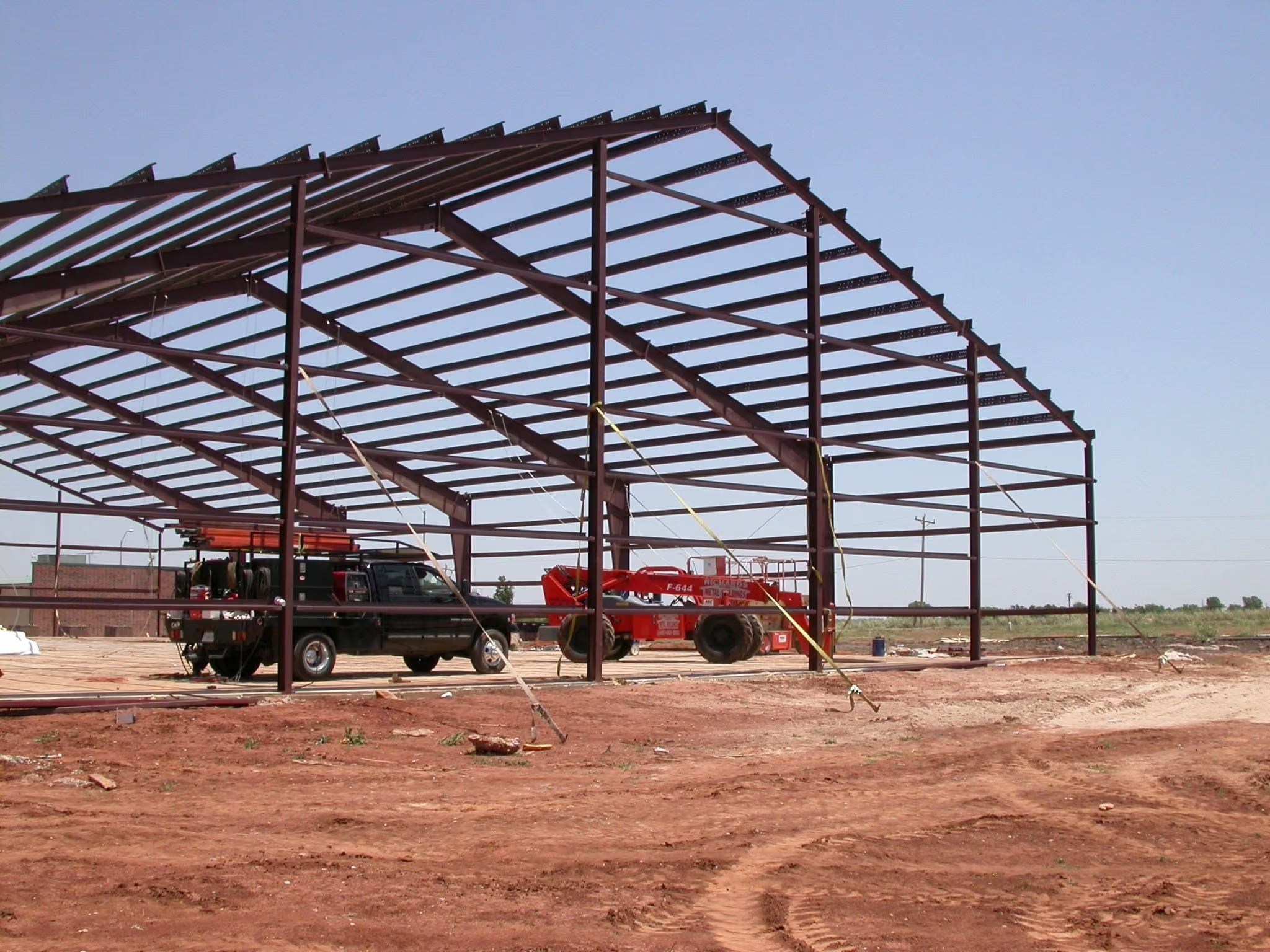
Long-span purlins are vulnerable to a failure mode called lateral-torsional buckling — the tendency of a deep, narrow member to twist out from under its load. Bracing prevents this and lets purlins reach their full design capacity.
Three main bracing systems are used in metal buildings:
Skipping bracing is one of the most common cost-cutting mistakes in DIY metal buildings. The savings are real, but so is the risk — an unbraced purlin can deflect and twist enough to pull fasteners loose from the roof panels above, even under design loads.
Purlins vs. Girts: What's the Difference?
Purlins and girts are both secondary framing members, and they're often made from the same C or Z profiles. The difference is orientation and location:
Functionally, they do the same job — provide a continuous attachment surface for the building skin and brace the primary members. In fact, Indaco's C-purlins are commonly specified for both roof purlins and wall girts on the same building. Same part, two structural roles. The naming convention just reflects where the member ends up in the finished structure.
A few practical notes on putting purlins in place:
Attachment. Purlins connect to rafters most commonly through bolted clip angles welded to the top of the rafter. The clip lets the purlin be set and bolted from above, which is faster and safer than welding overhead. Some builders weld purlins directly to the rafter — it works structurally but makes future modifications difficult.
Lapping Z-purlins. Z-purlins are designed to overlap at their supports, with the lap length specified by the engineer (typically 2 to 4 feet total, centered on the rafter). The overlap is bolted through both webs and creates the continuous-span behavior that makes Z-purlins efficient. Don't skip the lap bolts or shorten the lap.
Walking on purlins. Purlins are not designed as walkways. Crews regularly walk on installed purlins during framing, but only on the top flange and only with appropriate fall protection. Once roof panels are installed, walk on the panel ribs where they're supported by a purlin below, never in the field of the panel.
Field cutting and labeling. This is where pre-engineered kits save real money. Indaco ships purlins cut to length and labeled by location in the kit, so crews aren't field-cutting or guessing which piece goes where. That alone usually shaves a day off framing on a typical 40×60 building.
Are purlins load-bearing? Yes. Purlins carry roof loads — snow, wind, dead load, and live load — from the roof panels back to the primary frame. They are an essential structural component, not a finish or trim item.
Are purlins necessary for a metal roof? In almost all cases, yes. The exception is structural standing-seam panel systems designed to span directly between rafters, but those systems are uncommon and have specific design requirements. For typical metal buildings, purlins are required.
Are purlins and battens the same thing? No. Battens are smaller, lighter members — often wood — used to support roofing materials like tile or metal shingles over a structural deck. Purlins are heavier structural members that replace the deck entirely in metal building systems.
What's the difference between purlins and rafters? Rafters are primary framing members that span the full width of the building and carry loads directly to the columns. Purlins are secondary members that span between rafters and support the roof panels. Rafters are typically much deeper and heavier than purlins.
Can you walk on a metal roof with purlins? Yes, with caution. Once the roof panels are installed, walk along the lines of screws where the panel is supported by a purlin below. Never walk in the unsupported field of the panel — you can deform or puncture it.
How far can you span a 6-inch C-purlin? A 6-inch C-purlin can typically span up to about 18–20 feet under standard loads and proper spacing, but the exact span depends on gauge, bracing, and load conditions. An 8-inch C-purlin can typically span up to about 25 feet, and a 10-inch up to 30 feet.
Purlins are simple in concept but consequential in practice. Get the sizing right and your building stands up to decades of weather and use. Get it wrong and you're looking at deflection problems, panel damage, or worse.
Indaco Metals manufactures C and Z purlins, as well as eave struts, in-house at our Shawnee, Oklahoma facility — one of the few suppliers with our own roll former, which means we control quality and lead times instead of waiting on a distributor. Every kit ships with stamped engineered drawings, purlins cut to length and labeled by location, and the full set of trim, fasteners, and laser-cut parts your project needs.
Need purlins for a new build or a retrofit? Use our 3D builder or send us a sketch, and we'll return a line-item scope with engineered purlin sizes, panel lengths, and a lead time — usually within 24 hours.
Whether you're sizing C-purlins for a new barn or shop, sourcing Z-purlins for a larger commercial roof, or trying to figure out the right gauge and spacing for your specific loads, we'd love to help you spec the right components for your project. Call or stop by either of our Oklahoma locations, Monday through Friday, 8am to 5pm:
Shawnee: 3 American Way, Shawnee, OK 74804 — (405) 273-9200
Sand Springs: 17427 W 9th St, Sand Springs, OK 74063 — (918) 419-6053
Complete this short form, or give us a call anytime:



.avif)