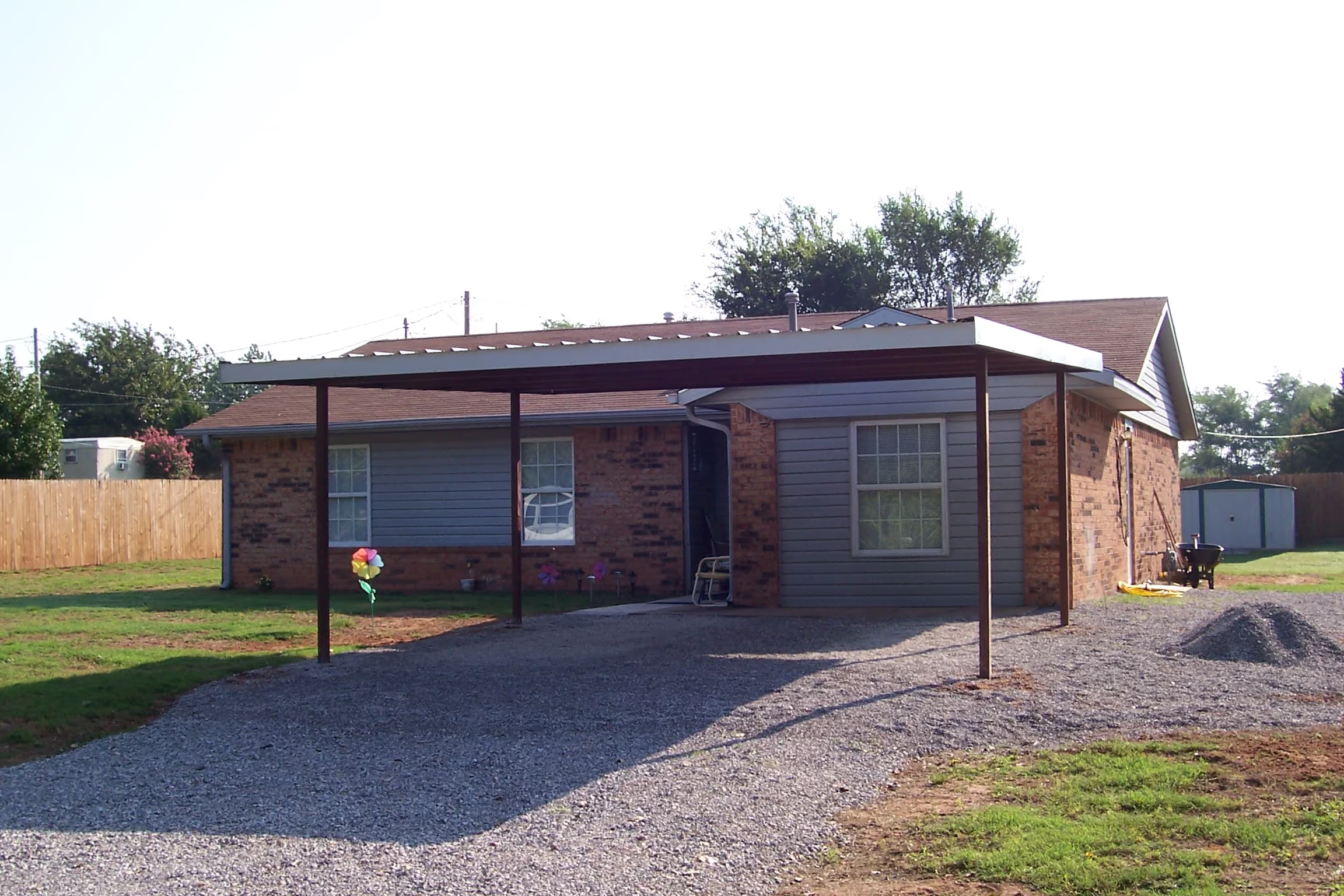
The most common objection we hear about metal buildings hasn't changed in twenty years: "They look too industrial."
And honestly? Twenty years ago, that was a fair critique. Metal siding meant ribbed white panels on a machine shed. If you wanted warmth and character on a home, a barndominium, or a commercial storefront, you reached for cedar, pine, or cypress — and then you signed up for a lifetime of sealing, staining, and replacing boards the carpenter bees chewed through.
That's no longer the tradeoff. Thanks to advances in printed-coil technology, metal siding that looks like wood has become one of the fastest-growing product categories we offer. These panels carry the grain, tone, and texture of real timber — but they're steel underneath, which means no rot, no termites, no warping, and no repaints every five to seven years.
We just wrapped a project using our new wood grain line, and the results are the kind of thing that changes minds. Here's what you need to know.
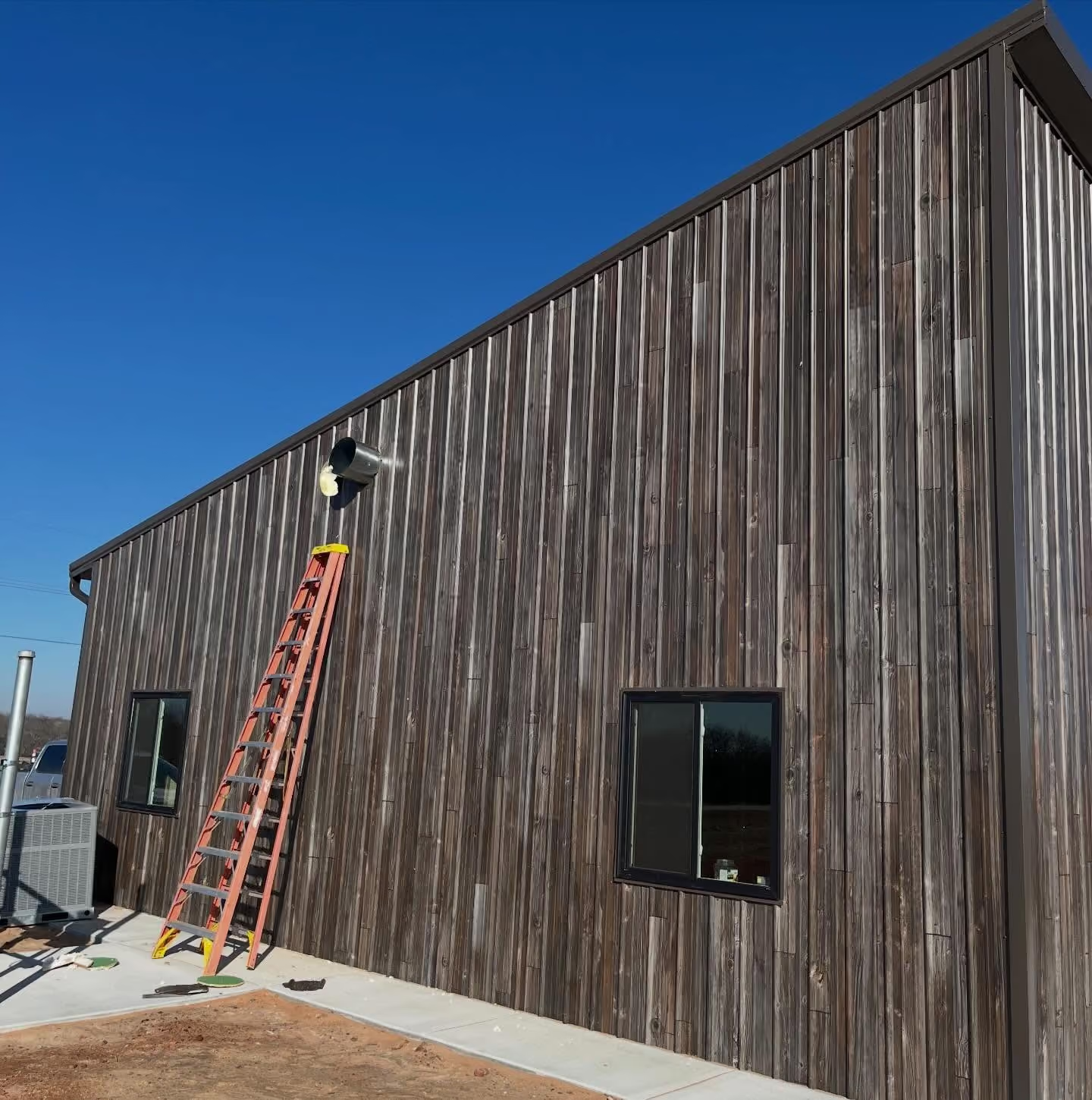
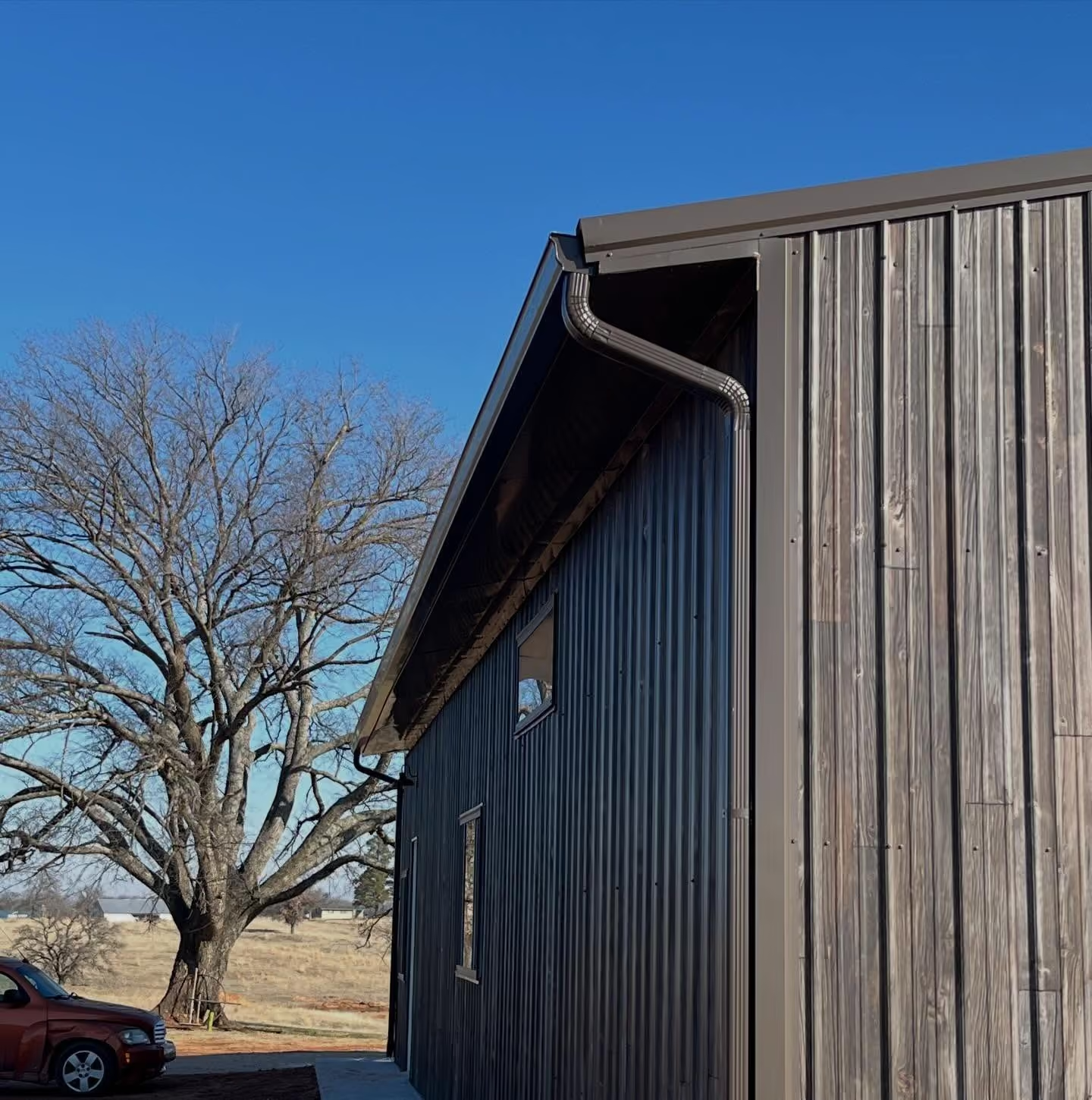
Wood grain metal panels are 26 gauge standard steel siding panels with a high-definition wood pattern printed directly onto the coil during manufacturing. The printing happens before the panel is formed, so the grain follows the contours of the profile naturally — it doesn't look like a sticker slapped on a flat sheet.
The paint system on top of the print is what makes the whole thing work. Quality manufacturers use a PVDF or SMP coating rated for 30 to 40 years against fade, chalk, and chip. That's the same coating technology used on commercial architectural panels — it just happens to be carrying a walnut, cedar, or weathered barnwood pattern instead of a solid color.
Compared to real wood, the math is hard to argue with. Real cedar siding runs $7–$12 per square foot installed and needs staining every 3–5 years. Wood grain steel siding runs in a similar upfront range but eliminates the recurring maintenance entirely. Over a 30-year ownership window, you're looking at thousands in labor and material savings — and you never climb a ladder to scrape and reseal.
This is where the "too industrial" objection falls apart. Wood grain panels aren't just for covering a whole building — in fact, some of the best applications use them as accents against traditional metal or other siding materials.
Metal wainscoting — wood grain panels running 3 or 4 feet up the lower portion of a wall — solves two problems at once. It protects the high-wear zone of your exterior from string trimmers, pets, and weather, and it breaks up a tall wall visually so the building doesn't feel like a shoebox. We've been specifying wood grain wainscoting under stone veneer, under traditional lap siding, and under solid-color metal above. It works with all of them.
This one surprises people. A porch ceiling done in wood grain metal looks nearly indistinguishable from tongue-and-groove pine from ten feet away — which is to say, from anywhere a guest is actually standing. But it won't sag, won't stain from humidity, and won't need repainting when the porch ceiling starts cupping in year eight. The same goes for wood look metal soffit around the eaves. It's one of those details that makes people look twice.
For anyone building a barndominium, wood grain metal has become a go-to for interior feature walls, loft railings, and ceiling accents. The panels are lighter than shiplap, install faster, and the finish is dead consistent — no knots in weird places, no boards that took stain differently than their neighbors.
Does it actually look like wood, or like metal pretending to be wood?
Fair question. From farther than about four feet, most people cannot tell the difference. Up close, the texture is smoother than real wood — there's no raised grain under your fingertips — but the visual pattern reads as authentic. The giveaway on cheaper printed panels is repetition (you see the same "knot" every few feet). Quality panels use longer print cycles that randomize the pattern.
How long does the finish last?
Depends on the coating. Entry-level printed panels might carry a 20-year warranty. The PVDF-coated premium lines we carry warranty the finish for 30–40 years against fade and chalk. Either way, you're well past the point where real wood would need multiple repaints.
What about scratches?
The print is sealed under the clear coat, so normal scuffs won't expose raw steel. Deep gouges can be touched up with color-matched paint, same as any metal panel.
While we're on the subject of panels that don't look like typical metal — you may have noticed more buildings lately with a reddish-orange, rusted-patina appearance. That's weathering steel, commonly called Corten, and it's the other major aesthetic shift happening in metal building design right now.
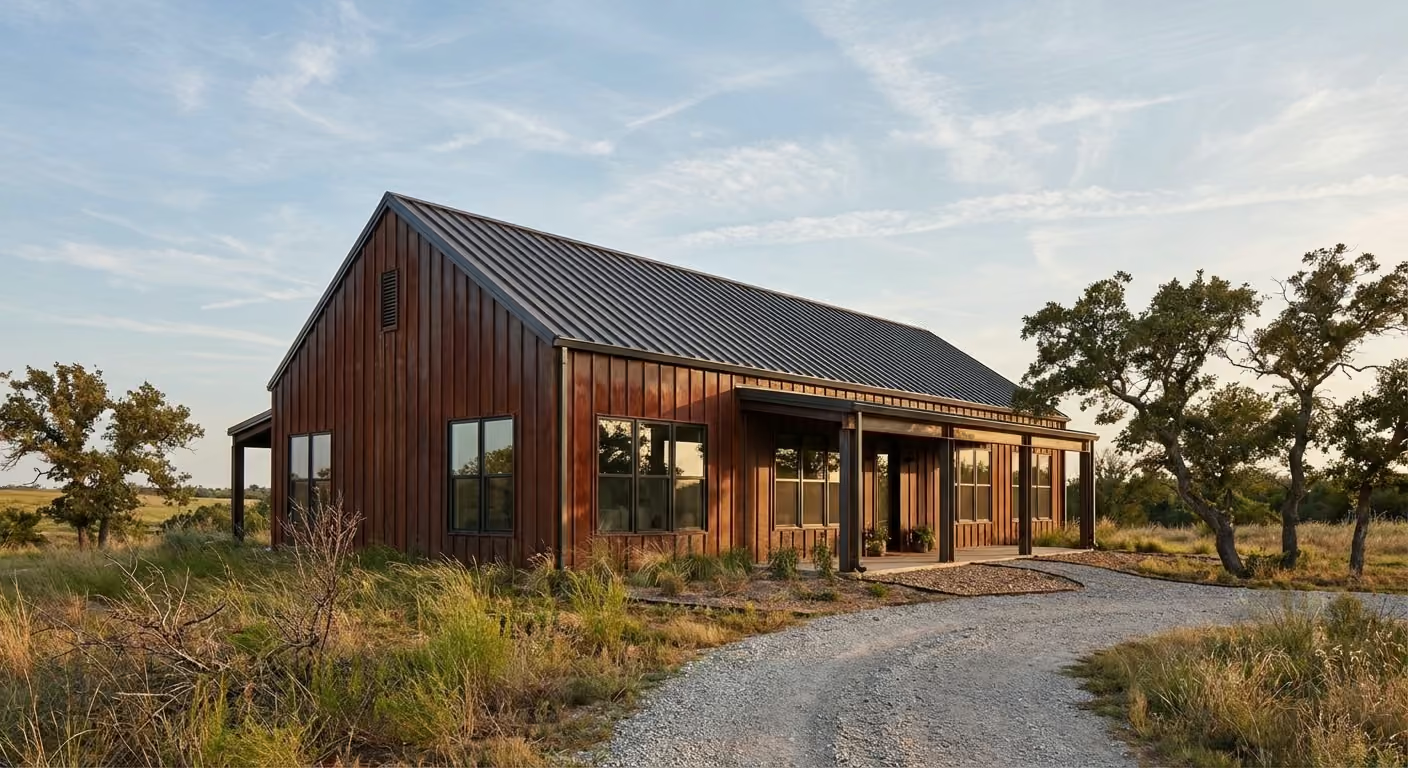
True Corten is a specific alloy that forms a stable, protective rust layer on its own. The printed-coil version — what most manufacturers are actually selling — gives you that weathered, rustic look on a standard steel substrate with a 30+ year paint warranty and none of the runoff staining issues real Corten can cause on concrete below.
If you've been holding off on a metal building because you didn’t like the industrial aesthetic, wood grain panels are worth a serious look. They offer a warm home-like appearance without creating a new maintenance problem — which is, honestly, a rare trick in building materials.
For the homeowner putting up a barndominium who wants it to feel like a home. For the commercial owner who needs durability but doesn't want a box. For the property owner tired of restaining cedar every four summers. This category is hitting a sweet spot that didn't exist a decade ago.
If you're in the planning stage and want to see samples in person — including the wood grain line from our recent project and the Corten-look panels — get in touch. We'll walk you through the profiles, finishes, and warranty details, and help you figure out whether wood grain metal is the right call for what you're building.
Call or stop by either of our Oklahoma locations, Monday through Friday, 8am to 5pm:
Shawnee: 3 American Way, Shawnee, OK 74804 — (405) 273-9200
Sand Springs: 17427 W 9th St, Sand Springs, OK 74063 — (918) 419-6053
Complete this short form, or give us a call anytime:




.avif)