Shop for a metal building online and you'll see two very different price tags for what looks like the same 40x60 shop. The difference is usually hiding where you can't see it: the frame. One quote is for a red iron building. The other is for a kit framed with thin steel tubing.
Both are "steel buildings." They are not the same thing. At Indaco Metals, we've been manufacturing engineered metal building kits in Oklahoma since 1995, and this is one of the most common questions we hear. In this guide, we'll explain what red iron actually means, how it compares with tube steel, and when rigid framing is worth the investment.
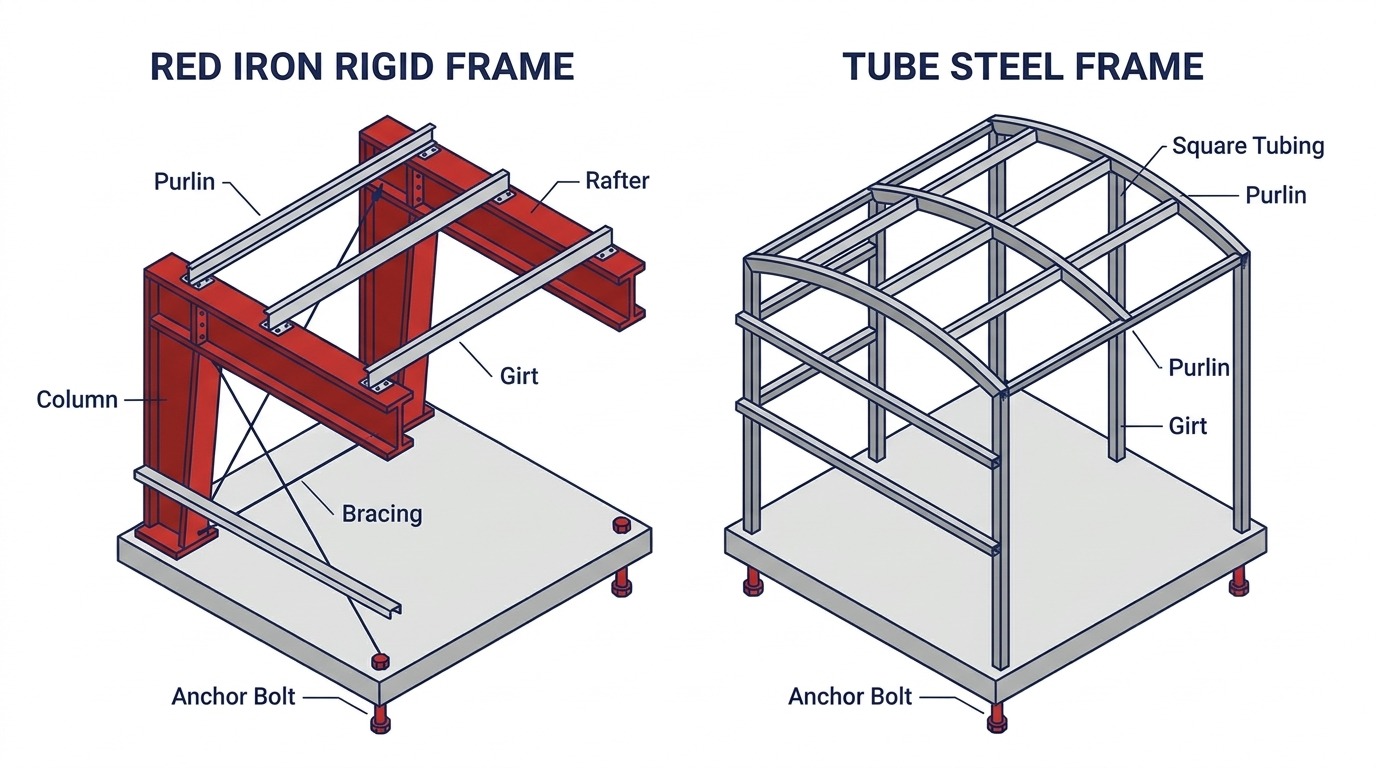
"Red iron" is industry shorthand for primary framing made from hot-rolled structural steel, the same kind of beams used in commercial construction. The columns and rafters are heavy I-beam style members, fabricated in a shop and bolted together on site.
The name comes from the color. Structural steel is shop-coated with a red oxide primer that protects it from rust while it's stored, shipped, and assembled. Despite the nickname, it's steel, not iron.
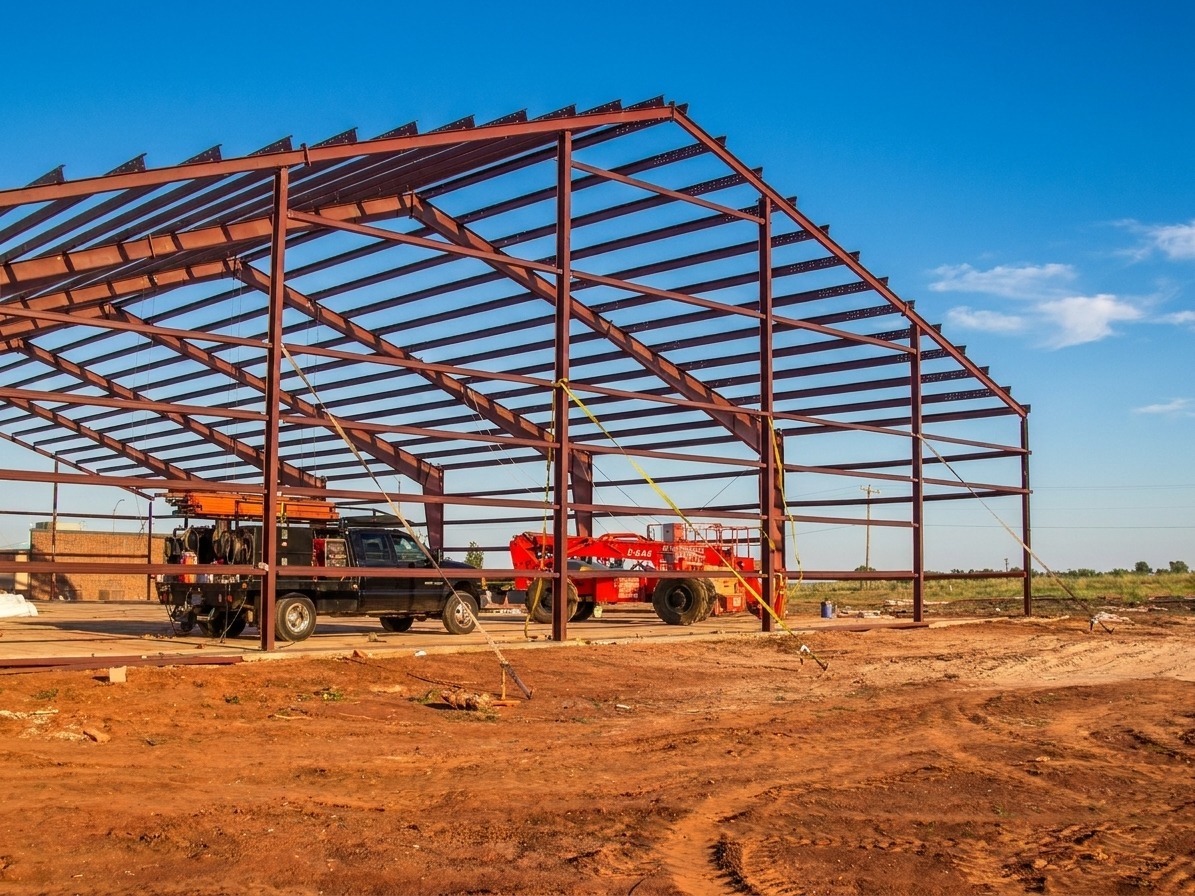
A few things to know about red iron metal buildings:
Tube steel (or tubular steel) buildings use hollow square or rectangular tubing for the frame, usually cold-formed from light-gauge steel such as 14 or 12 gauge. It's the framing behind many of the carports, garages, and "barn" kits sold by online dealers.
Tube steel has real advantages. It's lightweight, affordable, and quick to put up, which makes it a good match for carports, lean-tos, and small storage buildings. The trouble starts when thin tubing is stretched into a wide shop, a tall equipment barn, or a barndominium. Spans, eave heights, and door openings that are easy for structural steel push tubing to its limits.
Here's how the two framing systems compare on the points that matter most for a shop, barn, or barndominium.
We build for some of the toughest weather in the country. Spring storms bring straight-line winds and hail, and winter can bring ice that loads a roof fast. A metal building is only as strong as the frame and connections underneath its panels.
That's why engineering matters more than any one material. Ask any seller how the building was designed for your county's wind and snow loads, and whether you'll receive stamped drawings for your permit. If the answer is vague, the price probably is too.
A red iron building kit costs more upfront than a tube steel kit of the same footprint. For many projects, the added strength and flexibility pay for themselves. Rigid framing makes sense when you need:
If you just need to keep sun and hail off a truck, a carport or a smaller truss-frame building may be the smarter spend. The right answer depends on what you're putting inside.
Red iron building prices depend on size, eave height, roof pitch, door and window openings, insulation, and the loads your site requires. Steel prices also move through the year. That's why a "40x60 red iron building cost" you find online is rarely what you'll actually pay.
Keep in mind that price per square foot often drops as the building gets bigger. A kit quote also isn't the whole budget: plan for the concrete foundation, site prep, erection labor, and any interior finishing. The fastest way to get a real number is a quote built on your actual specs.
We don't believe in one-size-fits-all framing. Indaco manufactures fully engineered kits that include the framing, metal roofing, wall panels, trim, and accessories you or your contractor need to build.
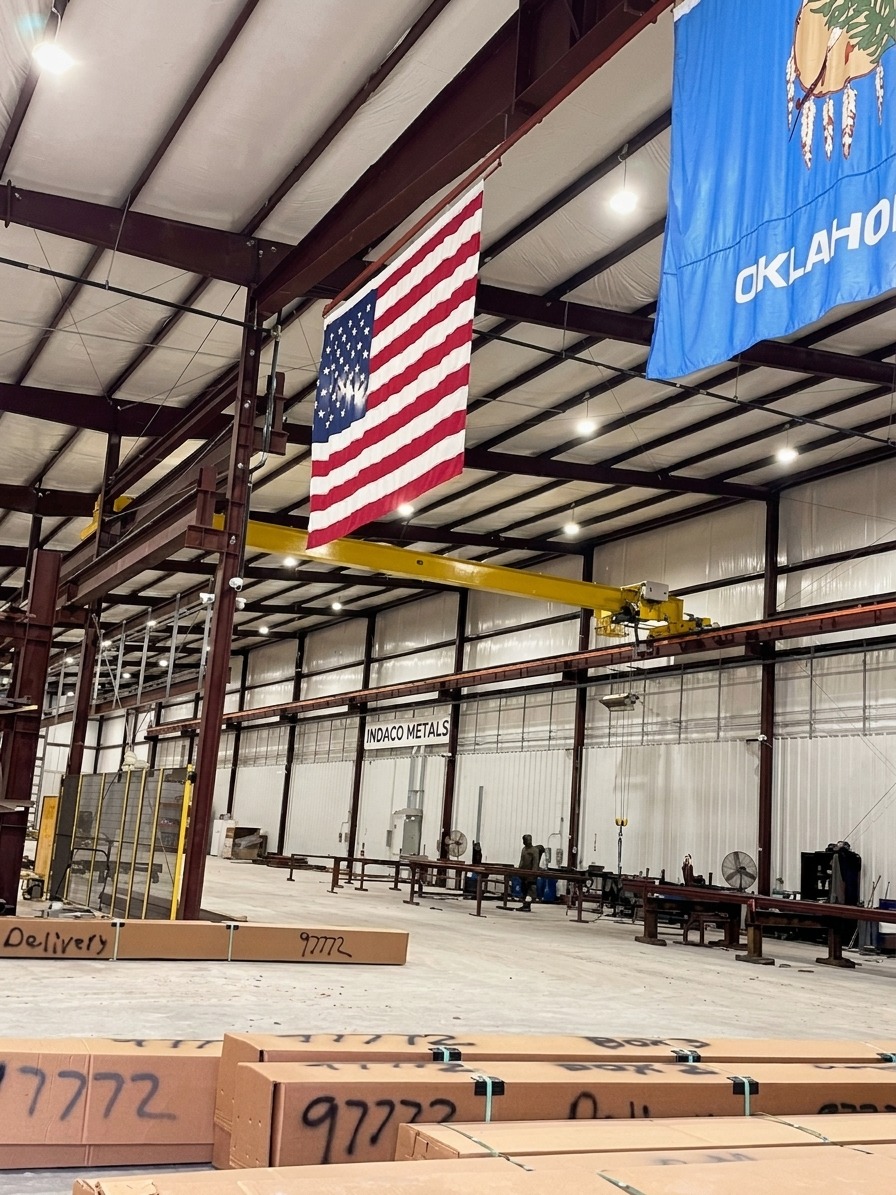
Our rigid frame kits use solid steel beams, wall supports, and bolt-together rafters. They're our choice for large metal barns, shops, churches, and commercial buildings, and they can be any size.
For smaller shops, garages, and barns, our truss frame kits can be welded or bolted together. They come in six standard widths, from 20x20 up to 60x120, at a 3/12 roof pitch. Not sure which frame you need? Our article on rigid vs. truss frame buildings breaks it down.
Have something unusual in mind? We'll design a custom metal building to your specs.
Whichever frame you choose, you can finish it with R-Panel, DuraLoc, or residential standing seam panels in 17 colors, all with a Sherwin-Williams coating built to resist fading.
Whether you're comparing red iron building kits or tube steel, ask every seller the same questions:
For a deeper checklist, see what to consider when shopping for a steel building.
No. Red iron is structural steel. The name comes from the red oxide primer applied at the fabrication shop.
For large buildings, yes. Hot-rolled structural beams are much thicker and can carry heavier loads over wider spans than light-gauge tubing.
Experienced DIYers do, but most rigid frame buildings need a crew and equipment to lift the frames. Many customers hire a contractor, and we're happy to share our contractor list.
For a standard vehicle cover, usually not. Our carport kits are built for that job. Red iron starts to make sense for oversized carports or equipment covers with wide spans.
Yes. A rigid frame gives you open floor plans, tall ceilings, and the strength to support interior finishes. Our Oklahoma barndominium guide covers more.
The frame is the part of your building you'll never see once it's finished, so it's worth getting right the first time. Since 1995, the Inda family has helped Oklahomans build shops, barns, churches, and homes that last, with a quality product at a fair price and real people on the phone.
Tell us what you're building, and we'll help you decide if red iron is the right fit. You can also sketch your idea first with our 3D Builder.
Call or stop by either Oklahoma location, Monday through Friday, 8 am to 5 pm:
Complete this short form, or give us a call anytime: