Do Metal Roofs Prevent Ice Dams? Winter Performance Guide
- Aaron Williams
- 3 hours ago
- 6 min read

How Metal Roofing Outperforms Shingles in Cold Weather
Aaron Williams
December 15, 2025

As winter approaches, homeowners in cold climates face a persistent roofing problem: ice dams. These destructive formations cause thousands of dollars in damage each year, leading to roof leaks, water damage, and compromised structural integrity. But here's an important question: do metal roofs prevent ice dams?
The short answer is that metal roofs are significantly less prone to ice dam formation than traditional asphalt shingles. Understanding why can help you make an informed decision about your next roofing project—and potentially save you from costly winter damage.
At Indaco Metals, we've been manufacturing metal roofing materials since 1995, and we've seen firsthand how proper metal roof installation can virtually eliminate ice dam problems. This guide explains how metal roofs perform in winter conditions and when additional protection might be needed.
What Are Ice Dams and Why Do They Form?
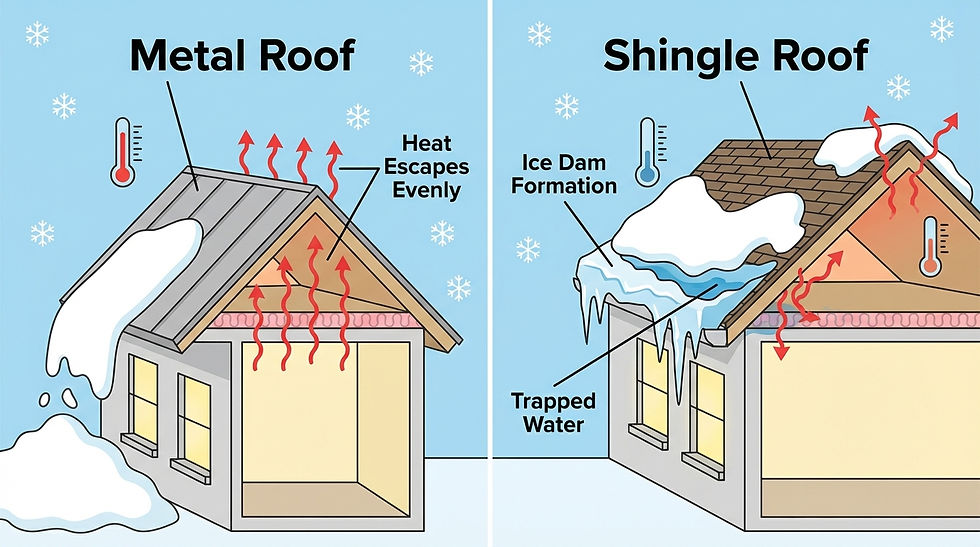
Before we discuss how metal roofs prevent ice dams, it's important to understand what causes them in the first place.
An ice dam forms when:
Heat from inside your home escapes through the roof
This heat melts snow on the upper portions of the roof
Melted water runs down toward the eaves
When it reaches the colder eave area (which extends beyond the heated space), it refreezes
Ice builds up, creating a dam that traps additional meltwater
Trapped water backs up under shingles and leaks into your home
The key culprits are poor attic insulation, inadequate ventilation, and roofing materials that allow heat transfer and water penetration.
Do Metal Roofs Get Ice Dams?
While no roof is completely immune to ice dam formation under extreme conditions, metal roofs are far less susceptible than asphalt shingles for several important reasons.
Smooth, Slippery Surface
Metal roofing has a smooth, low-friction surface that allows snow to slide off naturally before it can melt and refreeze. This "self-shedding" characteristic is one of the primary advantages of metal roofing in winter climates. Snow that slides off can't form ice dams.
Superior Heat Reflection
Metal roofs, especially those with reflective coatings, don't absorb heat from the sun the way dark asphalt shingles do. This means less heat-induced melting during the day, which reduces the freeze-thaw cycle that creates ice dams.
Interlocking Panels Prevent Water Intrusion
Even if some ice does form at the eaves, metal roofing systems with properly installed interlocking panels provide a continuous barrier. Unlike shingles with multiple seams and gaps, metal roofing is far less vulnerable to water backing up underneath the roofing material.
Better Thermal Performance
When properly installed with adequate ventilation and insulation, metal roofs maintain a more consistent temperature across the entire surface. This prevents the warm-roof/cold-eave temperature differential that causes ice dams.
Metal Roof vs Shingle Ice Dams: The Key Differences
Factor | Metal Roof | Asphalt Shingles |
Surface Texture | Smooth, allows snow to slide | Rough, grips snow in place |
Heat Absorption | Reflects heat, stays cooler | Absorbs heat, accelerates melting |
Water Resistance | Interlocking panels, continuous barrier | Multiple seams, vulnerable to backup |
Snow Load | Self-shedding reduces weight | Snow accumulates, increases load |
Lifespan Impact | Ice formation has minimal effect | Ice dams can severely damage shingles |
Repair Costs | Rare ice dam-related repairs | Frequent shingle replacement needed |
The performance difference is significant. While shingle roofs in cold climates often require expensive ice dam removal services, heated cables, or frequent repairs, metal roofs typically experience far fewer winter-related problems.
How to Prevent Ice Dams on Metal Roofs
Even though metal roofs are inherently resistant to ice dams, proper installation and a few preventive measures ensure optimal winter performance.

Proper Insulation and Ventilation
The foundation of ice dam prevention—regardless of roofing material—is keeping your attic cold. This prevents heat from escaping through the roof and melting snow.
Key requirements:
Adequate attic insulation (R-49 to R-60 in cold climates)
Proper soffit and ridge ventilation
Air sealing to prevent warm air infiltration
Maintaining consistent attic temperature
Metal roofs perform best when the roof deck temperature stays close to outdoor temperature, preventing any snow melt from occurring.
Install Metal Roofing with Proper Pitch
Roof pitch affects how well snow sheds from a metal roof. Steeper pitches (4:12 or greater) allow snow to slide off more easily. Lower-pitch roofs may benefit from additional ice dam prevention measures.
Use Quality Underlayment
While metal roofing itself is highly water-resistant, quality underlayment provides an additional protective layer. Ice and water shield at the eaves offers extra insurance against any moisture that might attempt to work its way underneath.
Ensure Proper Eave and Drip Edge Installation
Proper eave construction and drip edge installation direct water away from fascia boards and prevent ice buildup at the roof edge. This is particularly important where gutters are installed.
Metal Roof Snow Guards: When You Need Them
While metal roofs' ability to shed snow is generally beneficial, the sudden release of large amounts of snow can create safety hazards or damage property below. This is where metal roof snow guards become important.

What Are Snow Guards?
Snow guards (also called snow retention systems) are devices installed on metal roofs to control snow release. Rather than allowing all snow to slide off at once in a dangerous avalanche, snow guards hold snow in place or release it gradually in smaller amounts.
When Snow Guards Are Necessary
Consider installing snow guards if:
Entryways, walkways, or driveways are directly below the roofline
Lower roof sections or dormers could be damaged by sliding snow
Landscaping, HVAC units, or other property is at risk
Gutters need protection from heavy snow loads
Local building codes require snow retention
Your roof pitch is steep (6:12 or greater)
Types of Snow Guards for Metal Roofs
Pad-Style Snow Guards: Individual pads attached to the roof surface in a pattern designed to hold snow evenly across the roof.
Bar-Style Snow Guards: Continuous bars that run horizontally across the roof, creating a fence-like barrier.
Clamp-Style Guards: Devices that clamp onto standing seam metal roofing without penetrating the roof surface.
The right choice depends on your roof type, pitch, snow load expectations, and aesthetic preferences.
Snow Guards vs Ice Guards
The terms are sometimes used interchangeably, but they serve the same basic purpose: controlling how snow and ice leave your roof. Some systems are specifically designed to break up ice formations as they slide, preventing large sheets of ice from causing damage.
Metal Roof Heat Cables: Are They Necessary?
Heat cables (also called heat tape or roof heating cables) are electric heating elements installed along roof eaves and in valleys to prevent ice buildup. But do you need them with a metal roof?
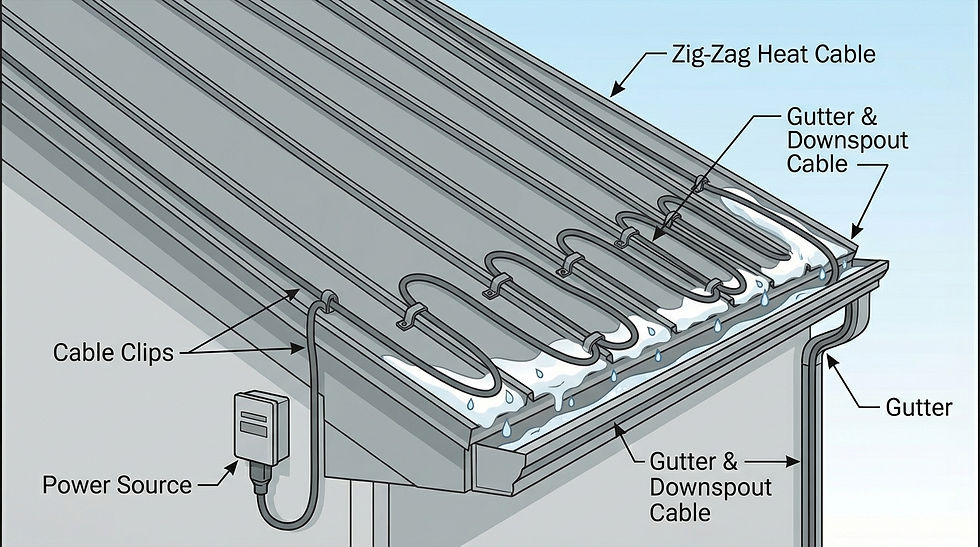
When Heat Cables Make Sense
For most properly installed metal roofs, heat cables are unnecessary. However, they might be beneficial in these situations:
Homes with chronic ice dam problems due to complex roof geometry
Valleys where snow and ice tend to accumulate
Areas with persistent gutter ice buildup
Extremely cold climates with heavy, wet snow
Homes where attic insulation improvements aren't feasible
Alternatives to Heat Cables
Before installing heat cables on a metal roof, consider:
Improving attic insulation and ventilation (addresses the root cause)
Installing or upgrading snow guards
Ensuring proper gutter slope and maintenance
Adding heated gutter systems if ice in gutters is the main problem
Heat cables add to your electricity costs and require maintenance, so they should be a last resort rather than a first solution.
Metal Roofing in Cold Climates: Overall Winter Performance
Beyond ice dam prevention, metal roofs offer several advantages in winter conditions:
Superior Snow Load Handling
Metal roofs are engineered to handle significant snow loads. The structural integrity of metal roofing, combined with its self-shedding properties, means less stress on your roof structure compared to shingles that hold snow accumulation.
No Freeze-Thaw Damage
Asphalt shingles are vulnerable to freeze-thaw cycles. Water absorbed by shingles expands when frozen, causing cracks, curling, and premature failure. Metal roofing doesn't absorb water, so it's immune to freeze-thaw damage.
Prevents Ice Formation in Valleys
Roof valleys are particularly vulnerable to ice dam formation because they channel water from large roof sections. Metal roofing's smooth surface and continuous barrier provide superior protection in valleys compared to shingles.
Energy Efficiency
Quality metal roofs with reflective coatings can actually reduce heating costs in winter. By reflecting solar radiation during sunny winter days and preventing heat loss through proper installation, metal roofs contribute to more consistent indoor temperatures.
Ready to Upgrade to Metal Roofing?
If you're tired of dealing with ice dams, winter roof damage, and the short lifespan of asphalt shingles, metal roofing from Indaco Metals offers a superior solution. Visit our locations:
Shawnee:
3 American Way
Shawnee, OK 74804
(405) 273-9200
Sand Springs:
17427 W 9th St
Sand Springs, OK 74063
(918) 419-6053
Hours: Monday-Friday, 8 AM - 5 PM
Or contact us online to discuss your roofing project, or explore our metal roofing options and color choices.
With nearly 30 years of experience, we're ready to help you choose a metal roofing solution that will protect your home through decades of winter weather.