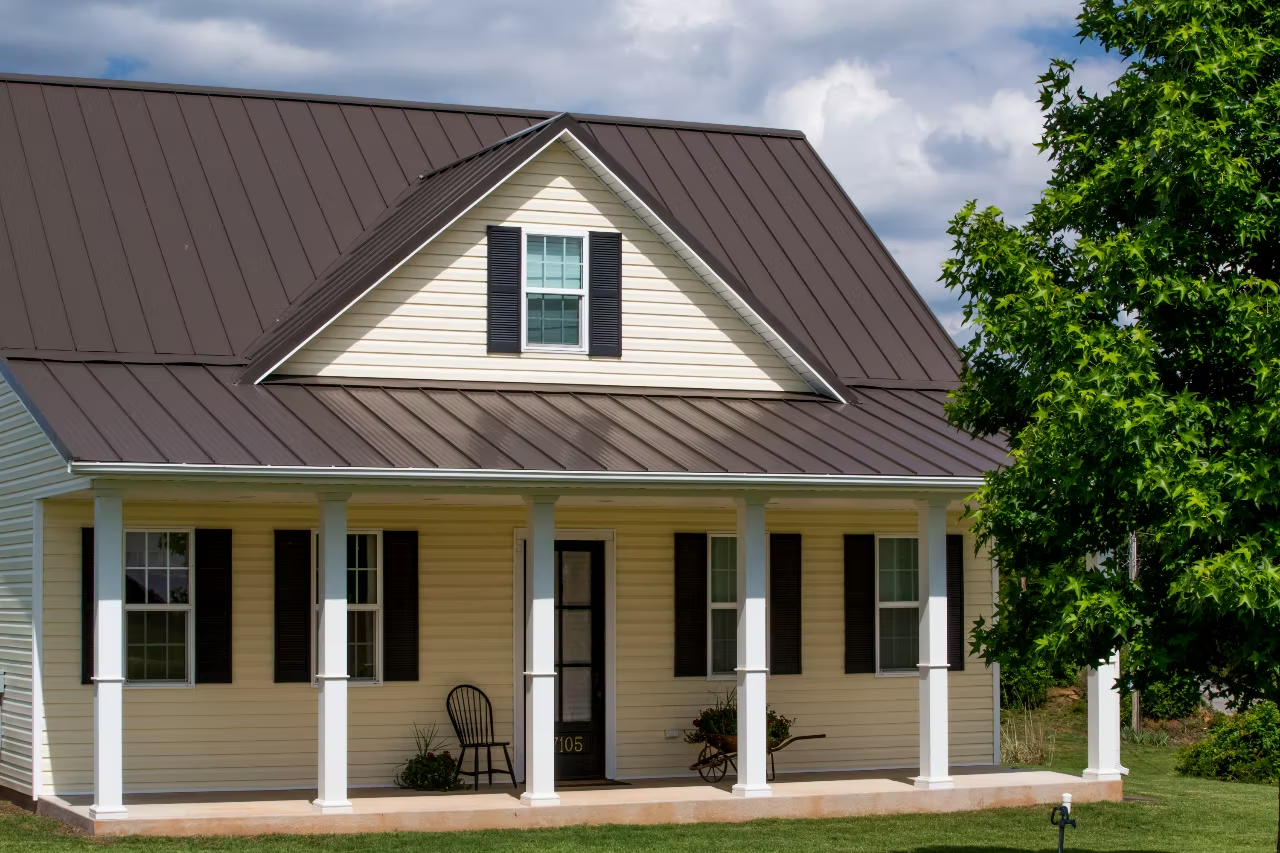
Each year, hailstorms cause billions of dollars in damage across the United States. In 2023 alone, hail damage led to over $19 billion in insurance claims, with roofing damage accounting for approximately 80% of those costs. With costs of damages rising each year, protecting your home or business with hail resistant roofing isn't just smart—it's essential.
When golf ball-sized hail strikes your property at speeds reaching 100 mph, the integrity of your roof is put to the ultimate test. The question many property owners ask is simple: "Which roofing material offers the best protection against these punishing impacts?"
Let's explore why metal roofing has become the go-to solution for hail resistant roofing and what you should know before making this critical investment in your property's protection.
Before diving into specific materials, it's important to understand how roofing products are tested and rated for hail resistance. The industry standard is Underwriters Laboratories (UL) 2218 impact resistance test, which evaluates how roofing materials stand up to simulated hail impacts.
The UL 2218 test categorizes roofing materials into four classes based on their ability to withstand impacts:
For a roofing material to pass a particular class rating, it must withstand the impact without cracking, splitting, or allowing water penetration. Most quality metal roofing systems achieve a Class 4 rating—the highest possible level of impact resistance.
Metal roofing systems naturally possess several characteristics that make them exceptionally hail resistant:
Unlike asphalt shingles that can crack on impact, metal roofing distributes the force of hail impacts across a wider area. The inherent strength of steel or aluminum helps prevent penetration even from larger hailstones.
The profile of metal roofing plays a significant role in its hail resistance:
The thickness of metal roofing material (measured by gauge) directly affects its hail resistance:
When comparing common roofing materials for hail resistance, the differences become clear:
The table above illustrates why metal roofing consistently outperforms traditional materials when it comes to hail resistance. While the initial investment may be higher, the long-term value becomes evident when considering the reduced frequency of repairs and replacements. For a more detailed comparison, check out our article on metal roofs vs. shingles.
One of the most compelling advantages of installing hail resistant metal roofing is the potential for insurance savings.
Many insurance companies offer premium discounts ranging from 5-35% for homes and businesses with Class 4 impact-resistant roofing. These discounts aren't just marketing—they reflect the real-world reduction in claims that insurance companies experience with metal roofs.
Want to maximize your insurance benefits? Here's what savvy property owners do:
First, contact your insurance provider before installation to understand what discounts are available. During the roofing project, make sure your contractor provides proper documentation of materials used. After your new roof is installed, submit all certification paperwork to your insurance company, and then verify annually that your discount is being properly applied to your premium.
The numbers tell a compelling story. With annual premium savings between $300-800, avoiding $1,000-2,500 deductibles after hail events, and tripling the lifespan of your roofing system, the long-term savings can exceed $15,000 over a 30-year period—often covering the entire cost difference between metal roofing and traditional materials.
Even the highest-rated materials can fail if improperly installed. To ensure your metal roof delivers optimal hail resistance:
High-quality synthetic underlayment provides an additional moisture barrier and can help absorb impact energy. This secondary layer of protection becomes crucial in preventing water intrusion if the primary metal layer experiences any damage.
The method used to secure your metal roofing can significantly affect its hail resistance:
While some property owners may consider DIY installation for smaller projects, professional installation ensures:
When considering your roofing options, remember these key points about metal roofing:
While the upfront cost may be 30-50% higher than traditional materials, the total lifecycle cost tells a different story:
For more on these benefits, see our article on the benefits of metal roofing.
Hail resistant roofing isn't just about surviving the next storm—it's about investing in decades of peace of mind. Metal roofing systems consistently outperform traditional materials in terms of hail resistance, longevity, and overall value.
With proper installation and maintenance, a quality metal roof can provide the ultimate protection against hail while delivering significant savings through reduced repairs, lower insurance premiums, and improved energy efficiency.
Ready to protect your home or business with hail resistant metal roofing? Our team is here to help you find the perfect solution for your specific needs. Call us today or use our contact form to schedule a free consultation and estimate. Your property deserves nothing less than the best protection available.
Call or stop in at either of our locations with questions about our metal roofing offerings. Our hours are Monday - Friday, 8am - 5pm.
Shawnee Location
3 American Way
Shawnee, OK 74804
(405) 273-9200
Sand Springs Location
17427 W 9th St
Sand Springs, OK 74063
(918) 419-6053
Complete this short form, or give us a call anytime: